


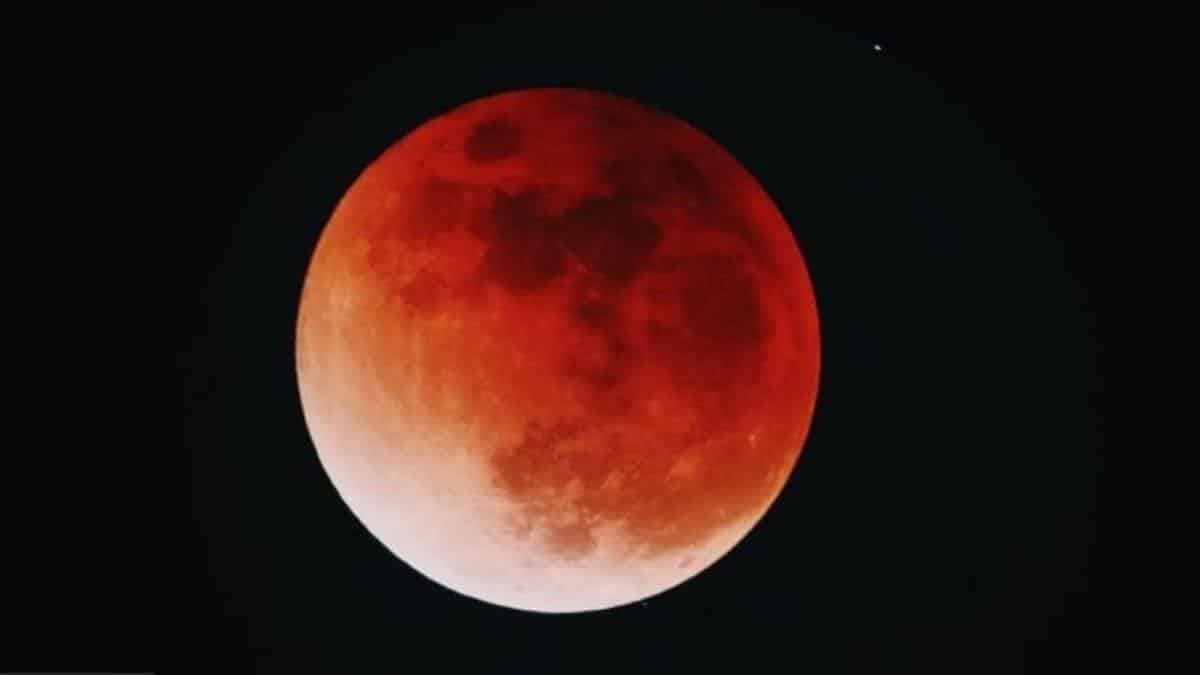
On November 19, stargazers will be treated to a partial lunar eclipse, which will also be the year’s final lunar eclipse. The previous time a long partial eclipse like this happened was on February 18, 1440, and the next one will be on February 8, 2669.
When the Earth passes between the Sun and the Moon, but not in a perfect line, a partial lunar eclipse occurs. The Earth’s shadow covers a small portion of the moon, resulting in a reddish Moon. It’s also known as the beaver moon or frost moon. November full moons got their name because this is when the first snowfall and frost occur, and beavers begin to build their dams or traps.
North America, South America, Eastern Asia, Australia, and the Pacific Region will all be able to see the partial moon eclipse.
A small portion of Arunachal Pradesh and Assam will watch the partial eclipse, while those in Uttar Pradesh, Bihar, and Jharkhand will see the penumbral eclipse’s finish. When the Moon, Sun, and Earth are not exactly aligned, a penumbral lunar eclipse occurs, and the Moon passes through the penumbra, the outer half of Earth’s shadow.
“The partial eclipse will start around 12:48 IST and will end at 16:17 IST,” said Dr. Debiprosad Duari, Director, Research & Academic at MP Birla Planetarium in Kolkata. As a result, the partial eclipse will endure 3 hours, 28 minutes, and 24 seconds, making it the longest eclipse of the twenty-first century and nearly 600 years.”
“The penumbral eclipse, which occurs before and after the umbral partial eclipse, will begin around 11:32 IST and end around 17:33 IST.
At the maximum partial eclipse, at 14:34 IST, the Earth’s shadow will cover 97 percent of the Moon, and the Moon may appear blood red in color, which occurs when the red part of the sunlight passes through the Earth’s atmosphere and is least deflected, falling on the Moon, giving it a reddish tinge.”
On May 16, 2022, there will be another total lunar eclipse, although it will not be seen from India. On November 8, 2022, India will witness a total moon eclipse.