


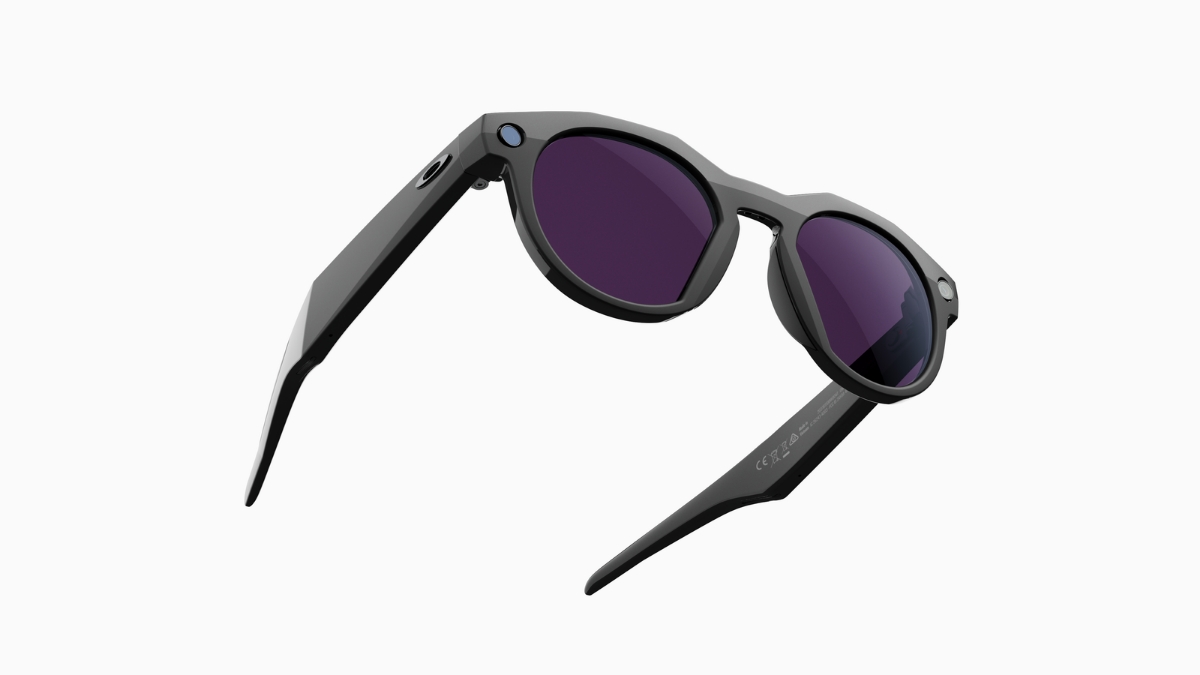
Smart glasses are becoming more capable with each generation. Many models combine open ear speakers, microphones, cameras, voice controls, and artificial intelligence inside frames designed for daily wear.
This combination raises an interesting question. If smart glasses can play music, handle phone calls, and record video from the wearer’s point of view, do people still need separate earbuds and an action camera?
The answer depends on what each device is expected to do. Smart glasses can replace earbuds for casual listening and may reduce the need for an action camera when capturing spontaneous moments. However, dedicated devices still offer important advantages in sound quality, privacy, stabilization, durability, and recording time.
For many users, smart glasses will become a convenient first option rather than a complete replacement for everything else.
How Smart Glasses Handle Audio
Smart glasses normally place small speakers inside the arms of the frames, close to the wearer’s ears. Sound is directed toward the user without blocking the ear canal.
This design can work well for podcasts, phone calls, navigation instructions, voice messages, and music played at a moderate volume. The user does not need to insert anything into their ears or carry a separate audio device.
Open ear audio also allows people to remain more aware of their surroundings. A pedestrian can hear traffic, announcements, and nearby conversations while still receiving directions. Someone working at home can listen to a podcast without becoming completely separated from the environment.
Products such as meta glasses bring audio, camera functions, and voice assistance into the same frames, reducing the number of devices a person may need during an ordinary walk, commute, or day out.
This convenience is the strongest argument for using smart glasses instead of earbuds.
Earbuds Still Provide Better Sound Isolation
Open ear speakers have physical limitations. Because they do not seal the ear, outside noise competes with the audio.
In a quiet room, this may not be a serious problem. On a busy train, crowded street, aircraft, or noisy gym floor, the wearer may need to increase the volume to understand speech or hear details in music.
Earbuds with a secure fit can block some outside sound. Models with active noise cancellation can reduce background noise further, allowing the user to hear content at a lower volume.
Bass response is another difference. Earbuds deliver sound directly into the ear canal and can create a stronger sense of depth. Smart glasses may sound clear enough for spoken content but can feel less powerful when playing music with heavy bass or complex production.
People who care deeply about music quality are unlikely to abandon good earbuds. Smart glasses are more suitable for convenient background listening than focused listening.
Privacy Is Different With Open Ear Audio
Smart glasses direct sound toward the ears, but they do not create a completely private listening space. Someone sitting close to the wearer may hear part of a call, message, or assistant response.
This matters in quiet environments such as offices, lifts, libraries, waiting rooms, and public transport. A message containing personal or business information should not be played through open speakers when other people are nearby.
Earbuds generally provide greater privacy because the audio remains inside the ear. They are therefore a better choice for confidential calls, private voice messages, or content that the user does not want others to hear.
The microphones in smart glasses can still be useful for calls, especially when the user’s hands are occupied. Wind and surrounding noise may affect how clearly the other person hears the conversation, however.
A user who takes frequent work calls may prefer earbuds with microphones designed specifically for voice isolation.
Open Ear Audio Does Not Remove Hearing Risks
Some people assume that open ear speakers are automatically safe because they do not sit inside the ear canal. The actual risk depends on the volume and the length of time a person listens.
Users may raise the volume when traffic, conversation, or machinery makes the audio difficult to hear. Long periods at high volume can still place unnecessary pressure on hearing.
The World Health Organization’s safe listening guidance recommends keeping personal audio volume at no more than 60 percent of the maximum and taking regular breaks from loud sounds.
If smart glasses cannot be heard clearly without turning the volume very high, switching to suitable earbuds may be the more sensible option. Noise cancelling earbuds can reduce the need to compete with loud background sound, although users must remain cautious in situations where awareness is important.
Smart Glasses Make Spontaneous Recording Easier
The camera is where smart glasses offer something action cameras cannot copy as naturally. The glasses are already positioned close to the wearer’s eyes, so they can record approximately what that person is looking at.
This is useful for capturing an unexpected moment. A parent can record a child’s first attempt at riding a bicycle without reaching for a phone. A traveler can photograph an interesting building while carrying luggage. Someone cooking or working on a project can record a process while keeping both hands available.
With an action camera, the user often needs to attach a mount, hold a short grip, adjust the angle, or remember to bring the camera. Smart glasses remove several of these steps.
The result can also feel more personal. Viewers see the activity from the wearer’s natural position rather than from a camera mounted on a distant object.
For ordinary daily moments and short clips, this convenience may be more valuable than having the highest possible recording quality.
Action Cameras Remain Better for Demanding Activities
Action cameras are built for situations that may be too difficult for everyday smart glasses. They are commonly designed to handle water, dust, vibration, impacts, and sudden movement.
A cyclist can secure an action camera to a helmet or bicycle. A swimmer can use a suitable camera in the water. Hikers, skiers, and motorsport enthusiasts can position cameras on equipment to capture angles that glasses cannot provide.
Smart glasses must remain comfortable enough to wear on the face. This limits how heavy, protected, and physically secure they can be.
Water resistance also varies. A pair of glasses may handle sweat or light rain without being suitable for swimming, heavy rain, or repeated exposure to water. Users should check the rating of their specific model rather than assuming that all smart eyewear is designed for sports.
People recording intense activity should also consider safety. Glasses can shift, fall, or become damaged during sudden movement. A securely mounted action camera is generally more dependable.
Stabilization Makes a Major Difference
Walking, running, and cycling create constant movement. Action cameras use strong digital or optical stabilization to make this motion appear smoother.
Smart glasses can apply stabilization too, but their position creates challenges. The human head turns frequently and quickly. A wearer may look at the ground, check traffic, or turn toward another person without realizing how abrupt the movement will appear in a video.
What feels natural to the wearer can look uncomfortable to the viewer. Rapid head movements may produce footage that is difficult to watch for more than a short period.
An action camera can be mounted on the chest, helmet, bicycle, or vehicle to provide a more consistent angle. Some models also capture a much wider view, allowing the user to crop or adjust the shot later.
Smart glasses are well suited to brief clips where personal perspective is part of the appeal. Dedicated cameras remain better for long, polished recordings.
Camera Controls Are More Limited
An action camera gives the user more control over resolution, frame rate, lens mode, stabilization, exposure, and recording format. It may also support external microphones, replaceable batteries, protective cases, and a range of mounts.
Smart glasses are designed to keep interaction simple. The wearer may press a button or use a voice command, but they usually have fewer ways to adjust the image before recording.
This simplicity is useful for quick capture. It is less suitable for someone trying to produce carefully planned travel, sports, or professional footage.
The absence of a viewfinder can also make composition difficult. The user looks toward the subject but may not know exactly what the camera includes. Objects near the edges can be cut off, and the frames may not be level.
Reviewing the recording on a connected phone helps, but the moment may already have passed.
Recording Time and Battery Life Matter
Audio playback, phone calls, video capture, wireless connections, and AI requests all use the battery inside smart glasses.
Short recordings may have little effect, but continuous video can drain the battery quickly. The frames also have limited space for a large battery because they must remain light and comfortable.
Action cameras are designed for longer recording sessions. Many offer removable batteries, allowing users to carry spares. They may also support larger memory cards and external power during extended shoots.
Earbuds have a similar advantage for audio. Their charging cases can provide several additional charges, and the earbuds perform fewer tasks than a pair of smart glasses.
A person using one pair of glasses for music, calls, AI, and video may reach the end of the battery sooner than expected. Once the glasses need charging, every function becomes unavailable at the same time.
Separate devices provide more flexibility. If the action camera battery runs out, the earbuds still work. If the earbuds need charging, the camera remains available.
Comfort Depends on How Long the Glasses Are Worn
Combining several devices can reduce the number of objects in a pocket or bag. It can also place more weight on the face.
Smart glasses contain batteries, speakers, cameras, microphones, and processors. Even when manufacturers distribute the weight carefully, the frames may feel heavier than ordinary eyewear.
Fit becomes particularly important during exercise. Glasses that slide down the nose or press against the ears can become distracting. People who do not normally wear glasses may also need time to become comfortable with them.
Earbuds create their own comfort problems. Some people dislike the pressure inside the ear or find that earbuds fall out during movement. Smart glasses may be a welcome alternative for these users.
An action camera does not need to remain on the face. It can be attached to equipment or placed in a bag when it is not recording.
The most comfortable choice depends on the person, activity, and length of use.
Privacy Is More Noticeable With a Camera on the Face
A camera inside a pair of glasses can make other people uncertain. They may not know whether the wearer is recording, taking a photograph, using AI, or simply listening to audio.
Recording lights provide some indication, but users should not rely on them in every situation. Asking before recording people in private or social settings remains important.
Action cameras are usually easier to recognize. Their purpose is obvious when they are mounted or held in view. People nearby can see that recording may be taking place.
Smart glasses require more careful behavior because they look closer to ordinary eyewear. Wearers should avoid using the camera in hospitals, changing areas, private meetings, classrooms, or homes without clear permission.
Privacy concerns will influence where smart glasses can be used, even if their technical ability continues to improve.
Could One Device Save Money?
Buying smart glasses instead of premium earbuds and an action camera may appear more affordable. The calculation depends on which features the user actually needs.
Someone who mainly listens to podcasts and records occasional short clips could use one pair of glasses for both purposes. Carrying fewer chargers and accessories is another benefit.
A person who values strong noise cancellation, high quality music, waterproof recording, long battery life, and smooth sports footage would still need dedicated devices. In that case, smart glasses become an additional purchase rather than a replacement.
Repair costs also deserve attention. If the camera, speakers, or battery develops a problem, the user may lose several functions at once. Replacing one pair of glasses could cost more than replacing a single set of earbuds.
Buyers should focus on their normal routine rather than the theoretical number of devices the glasses can replace.
Who Can Rely Mainly on Smart Glasses?
Smart glasses are most likely to replace both devices for people who prioritize convenience over maximum performance.
They can work well for commuters, casual travelers, parents, walkers, and content creators who want to capture short personal moments. They may also suit people who dislike having earbuds inside their ears.
Dedicated earbuds remain better for frequent flights, noisy commutes, confidential calls, and focused music listening. Action cameras remain stronger for water sports, cycling, skiing, motorsport, long recordings, and any situation where durability or stabilization is essential.
The decision is not simply about which product is newer. It is about matching the tool to the environment.
Smart Glasses Can Replace Some Uses, Not Every Device
Smart glasses combine several valuable functions in a form that is easy to wear. They can reduce the need for earbuds during casual listening and make a separate camera unnecessary for spontaneous, short recordings.
They do not yet provide the sound isolation of quality earbuds or the durability and recording control of a dedicated action camera. Battery life, privacy, fit, and image stability also limit how completely they can replace those devices.
For many consumers, the most practical setup will be flexible. Smart glasses can handle everyday audio and quick capture, while earbuds and an action camera remain available for situations that demand better performance.
The real strength of smart glasses is not that they make every other device obsolete. It is that they make common tasks easier when carrying or operating separate technology would interrupt the moment.