


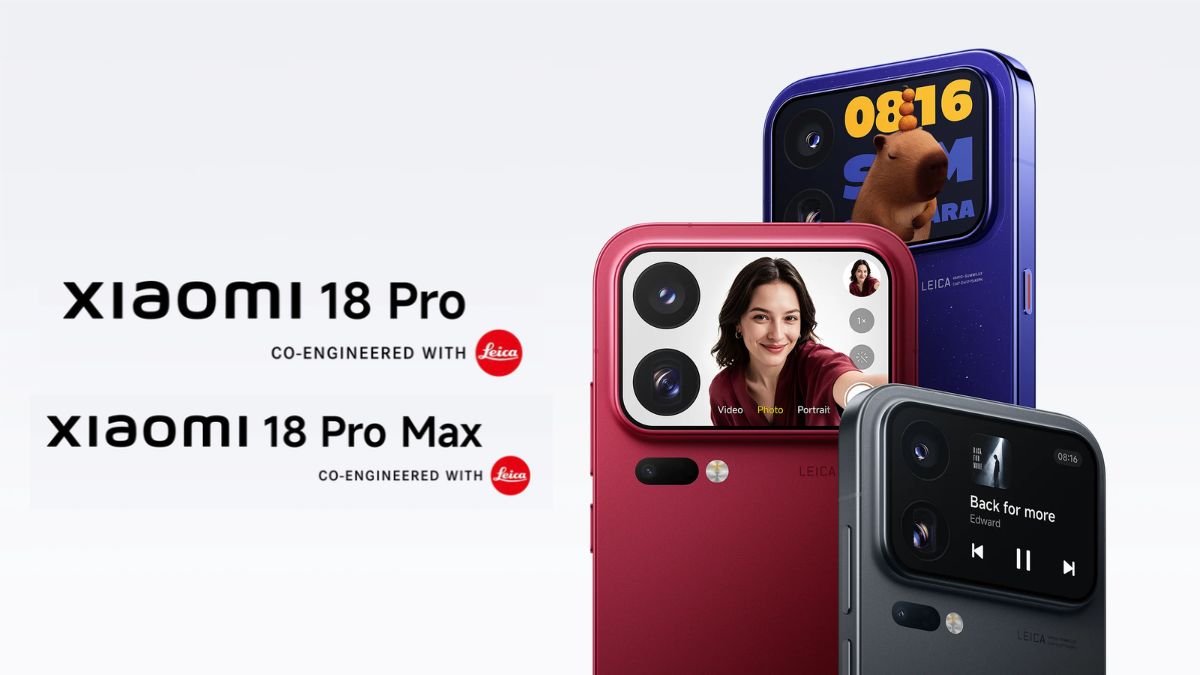
Following their launch in China, the Xiaomi 18 Pro and Xiaomi 18 Pro Max have now made their debut in the global market, but with smaller batteries compared to their Chinese counterparts. To add, the Xiaomi 18 Pro has become the first smartphone to launch globally with the Snapdragon 8 Elite Gen 6 chipset.
Read more about it below.
Xiaomi 18 Pro Series – Specifications and Features
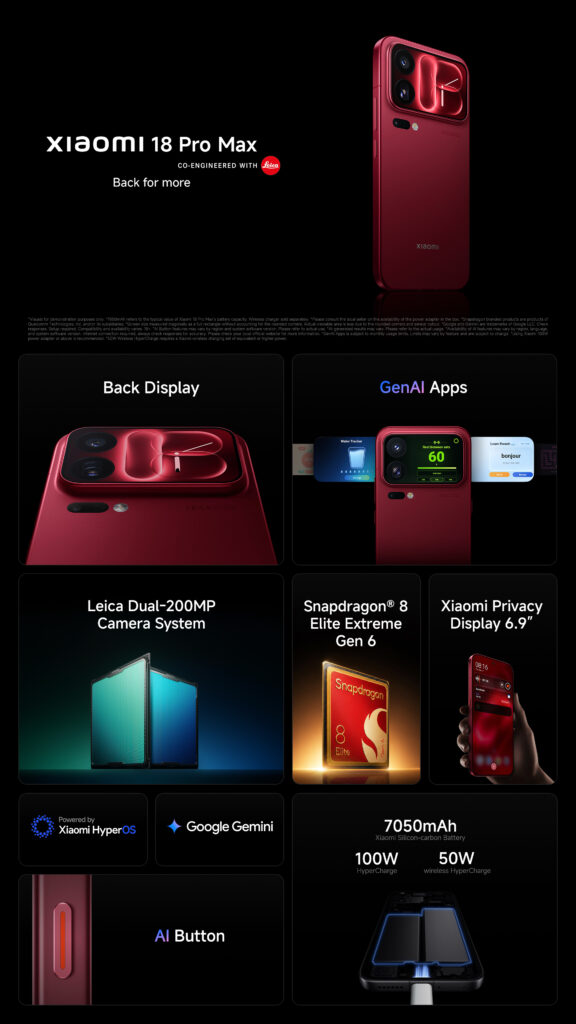
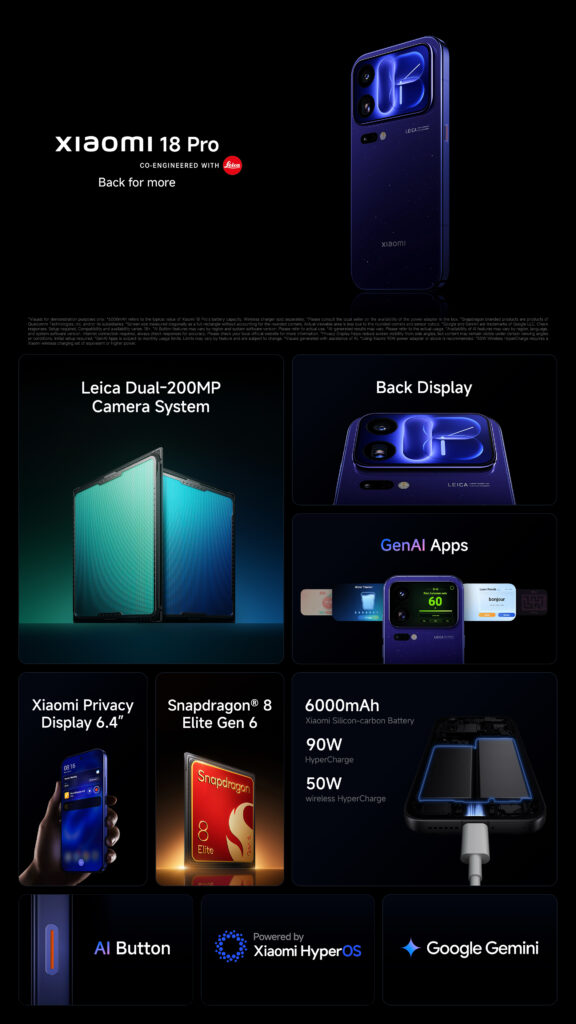
Starting with the performance specs, the Xiaomi 18 Pro comes equipped with the Qualcomm Snapdragon 8 Elite Gen 6 processor, while the Xiaomi 18 Pro Max features the Snapdragon 8 Elite Extreme Gen 6 chipset. Both devices offer the Qualcomm AI Engine and Xiaomi’s 3D IceLoop cooling system, along with LPDDR5X RAM and UFS 4.1 storage. They run on Xiaomi HyperOS 4.
About their displays, the Xiaomi 18 Pro features a smaller 6.4″ Xiaomi Privacy LTPO display with a resolution of 2436 × 1120 pixels, compared to the Pro Max, which sports a larger 6.9″ Xiaomi Privacy LTPO display with a 2624 × 1208 pixel resolution and a Xiaomi-custom M11 panel.
Other shared display features include DC dimming, Pro HDR, wet touch technology, HDR10+, and Dolby Vision support. Xiaomi Shield Glass 3.0 protection and TÜV Rheinland certifications for screen privacy protection, hardware-level low blue light, flicker-free operation, and circadian friendliness are also offered on both devices.
Coming to their rear displays, the Xiaomi 18 Pro carries a 2.7″ AMOLED screen with a 912 × 596 pixel resolution, while the Pro Max gets a 2.9″ AMOLED screen with a 976 × 596 pixel resolution. Both the front and the rear displays support a 120Hz refresh rate and up to 4,000 nits multi-scenario peak brightness. The rear displays feature Corning Gorilla Glass Victus 2 protection, while both main displays offer Xiaomi HyperRGB 2.0 technology.
Xiaomi 18 Pro Max – Global Variant Specs
Speaking of the cameras, the Xiaomi 18 Pro offers a 200MP Leica main camera with the Light Fusion 960 sensor and OIS support. The Pro Max, on the other hand, features a 200MP Leica main camera with the Light Fusion 960L sensor, LOFIC HDR, and OIS support. A 200MP Leica telephoto camera with the Samsung HP5 sensor and OIS, along with a 50MP Leica ultrawide camera using the OV51D sensor, are featured on both devices. Leica Summilux optics are offered on both, and a 50MP autofocus camera with the OV51D sensor handles selfies.
Regarding their batteries, the global Xiaomi 18 Pro and Pro Max pack 6,000mAh and 7,050mAh silicon-carbon batteries, respectively, compared to the larger 7,000mAh and 8,500mAh batteries reported for their Chinese counterparts. Speaking of charging support, the Xiaomi 18 Pro offers 90W wired HyperCharge, while the Pro Max supports 100W wired HyperCharge. Both devices also offer 50W wireless HyperCharge.
Other key specs include an ultrasonic in-display fingerprint sensor, AI face unlock, IP68 rating, dual SIM and eSIM support, Wi-Fi 7 with Multi-Link Operation, Bluetooth 6.0 with Dual-Bluetooth, NFC, an IR blaster, and an X-axis linear vibration motor.
While the Xiaomi 18 Pro features stereo speakers, the Pro Max variant offers a triple stereo speaker setup.
Both smartphones come in White, Black, Cosmic Blue, and Velvet Red colour options.
Pricing and Availability
In the UK, the Xiaomi 18 Pro and Xiaomi 18 Pro Max carry starting prices of £1,199 and £1,399, respectively, for their 12GB/256GB storage options.