

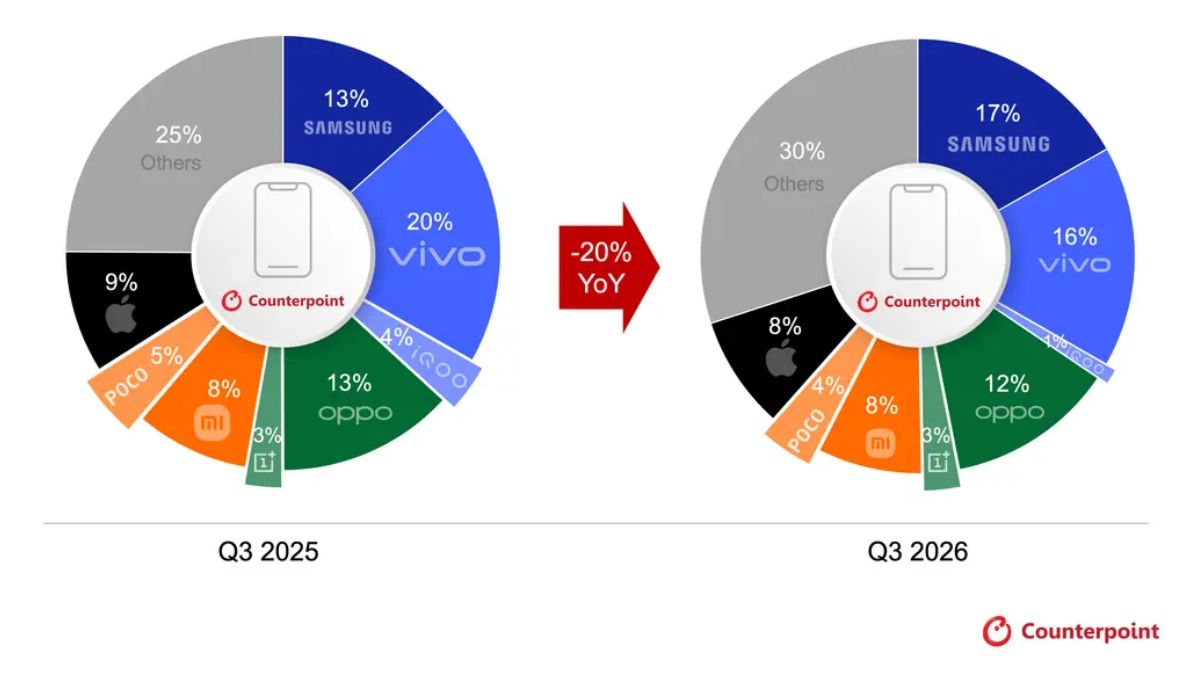
According to Counterpoint Research’s Monthly India smartphone tracker, India’s smartphone shipments fell 20% YoY in Q3 2026 (July-September). These results are due to record-high memory prices that drove up device costs, pulling down shipments for most brands.
India’s smartphone shipments in Q3 2026
With a 17% share in Q3 2026, Samsung reclaimed the top spot in the market after nine quarters. The Galaxy A series drove volumes, supported by the brand’s balanced online and offline strategy. Samsung’s relatively measured price hikes and proactive management of rising memory costs helped it outperform the overall market. Meanwhile, its eighth-generation Galaxy foldables, featuring a passport-style form factor for the first time, gained traction among consumers.
Vivo (excluding iQOO) was in second place in Q3 2026, with a 16% share. The T series remained under pressure throughout the quarter. While the Y series continued to drive volumes, vivo introduced the new S series to bridge the portfolio gap between the Y and V series.
OPPO retained the third position with a 12% market share, driven by triple-digit growth in the above-INR 20,000 price segment as it realigns its portfolio following price hikes and places greater emphasis on the mid and premium segments.
Xiaomi (including POCO) was at the fourth spot with a 12% share. Apple has seen a strong start to the iPhone 18 Pro series in India, with initial sales nearly 20% higher YoY than those of the iPhone 17 Pro series. Continued demand for the iPhone 17 lineup points to healthy consumer interest, even as Apple adjusts pricing across its portfolio amid rising memory and component costs.
Ai+ Smartphone was the fastest-growing brand in Q3 2026, with shipments increasing 306% YoY. Indian brands’ share increased from 2% in Q3 2025 to 7% in Q3 2026, driven by the growing number of domestic brands expanding their presence and boosting shipments in the lower price segments.
MediaTek remained the leading chipset OEM with a 45% share in Q3 2026, but UNISOC witnessed a resurgence following OEMs’ focus on optimising profits in the lower price segments.
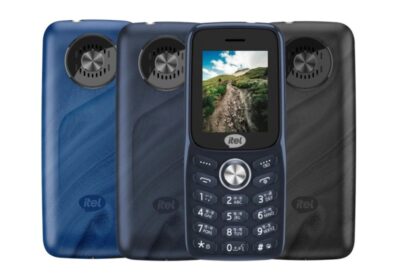
itel recorded healthy YoY growth of 88%, driven by its 4G portfolio in the sub-INR 15,000 price segment. Google witnessed over 50% YoY growth in Q3 2026, driven by the increase in promotional activity and mainline retail expansion.
Commenting on the market dynamics, Research Analyst Shubham Singh said, “Q3 marked a realignment for India’s smartphone market, as a memory-led cost squeeze compounded softer consumer demand. Rising component costs pushed device prices higher, putting increasing pressure on affordability and weakening the traditional mass-market volume engine, particularly below INR 15,000. Consumers became more selective, extended their replacement cycles and deferred upgrades, while OEMs prioritised margin protection, portfolio rationalisation and leaner channel inventory over aggressive volume expansion ahead of Diwali. Sub-INR 20,000 shipments declined by 47% in Q3 2026 as rising model prices pushed devices into higher price bands.”
Research Director Tarun Pathak said, “Entering 2027, the market is likely to remain on a challenging footing, as higher device prices continue to extend replacement cycles and limit volume recovery. Growth opportunities will increasingly shift toward the premium and upper-mid segments, while the mass market remains under pressure from affordability constraints and tighter OEM margins. With upfront prices rising, no-cost EMIs, exchange offers and retailer-led promotions will become increasingly important conversion levers, helping consumers manage higher upgrade costs.”