

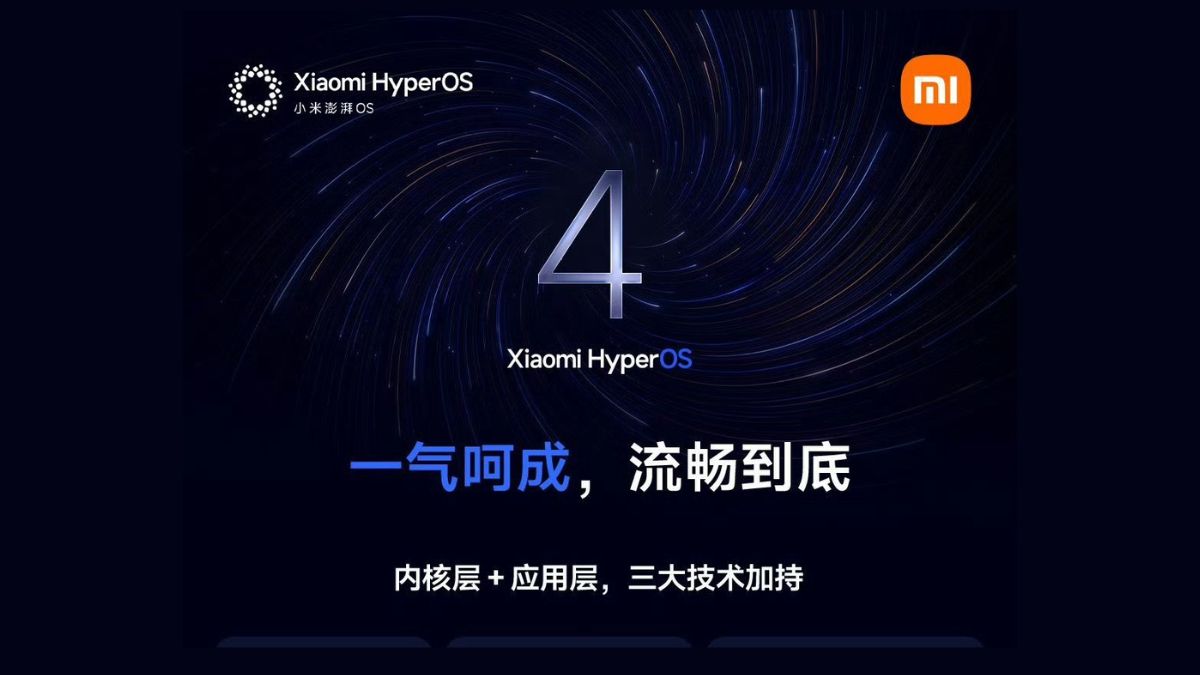
It is now official. Xiaomi has announced its latest HyperOS 4 update based on Android 17, along with revealing the beta rollout schedule for several of its smartphones and tablets in China. Not only that, but the brand has also revealed several new features and performance improvements that users will be experiencing with this new OS update.
Read more about it below.
Xiaomi HyperOS 4 Features and Improvements
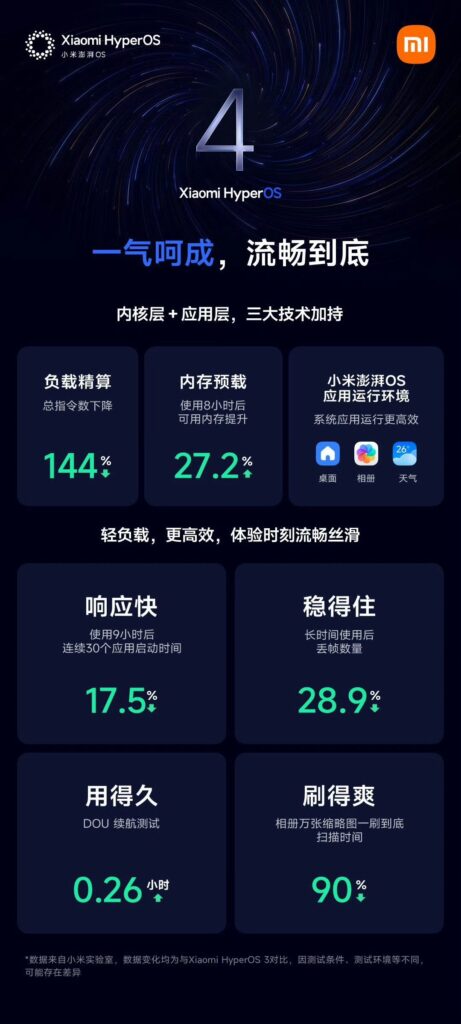
Starting with the performance-related improvements, Xiaomi says that HyperOS 4 brings several under-the-hood optimisations when compared with HyperOS 3. The total instruction count has been reduced by 14.4%, while available memory after eight hours of usage is claimed to have increased by 27.2%.
Xiaomi has also introduced a new HyperOS app runtime environment aimed at improving the efficiency of system applications. According to the brand, the time taken to sequentially launch 30 apps after prolonged usage has been reduced by 17.5%, while frame drops during extended usage are claimed to have been reduced by 28.9%.
Battery life has also received a slight improvement, with Xiaomi claiming an increase of 0.26 hours in its DOU endurance test compared with HyperOS 3. Another major improvement can be seen in the Gallery app, where the time required to scan through a large number of photo thumbnails has been reduced by up to 90%.
Xiaomi HyperOS 4
New Interface Changes
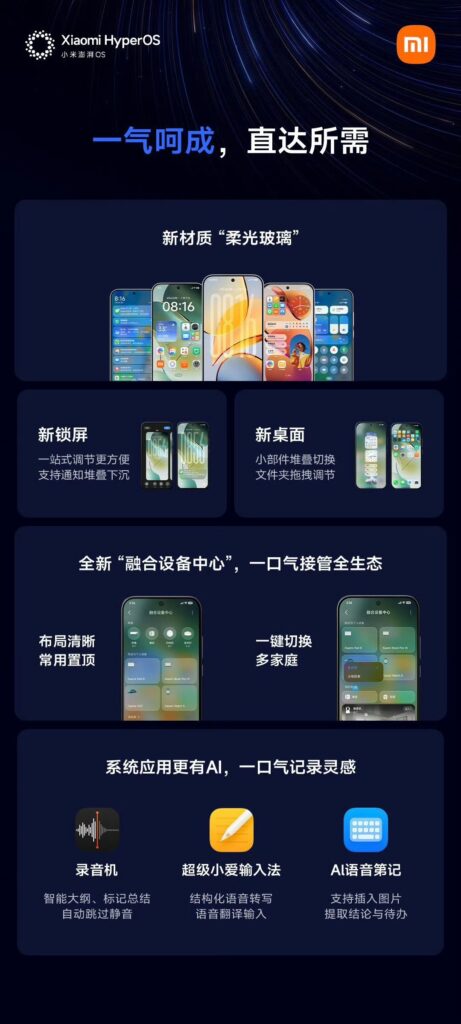
Coming to the visual changes, HyperOS 4 introduces Xiaomi’s new “Soft Light Glass” visual material, which brings translucent surfaces, layered elements, lighting effects and a more glass-like appearance across supported parts of the interface.
The Lock Screen has also been redesigned and now offers more convenient unified adjustments along with support for a stacked notification layout. On the Home Screen, users will be able to switch between stacked widgets and adjust folders simply by dragging them.
Another addition is the redesigned Integrated Device Centre, which offers a new layout, allows frequently used devices to be pinned and supports one-tap switching between multiple homes.
AI Features in System Apps
Xiaomi has also brought several AI-powered improvements to its system apps with HyperOS 4.
The Recorder app can now generate smart outlines and summaries, mark key information and automatically skip silent portions of recordings. The Super XiaoAI Input Method adds structured voice transcription and voice translation input, while AI Voice Notes allows users to insert images and extract conclusions and to-do items from their notes.
New AI Interaction Features
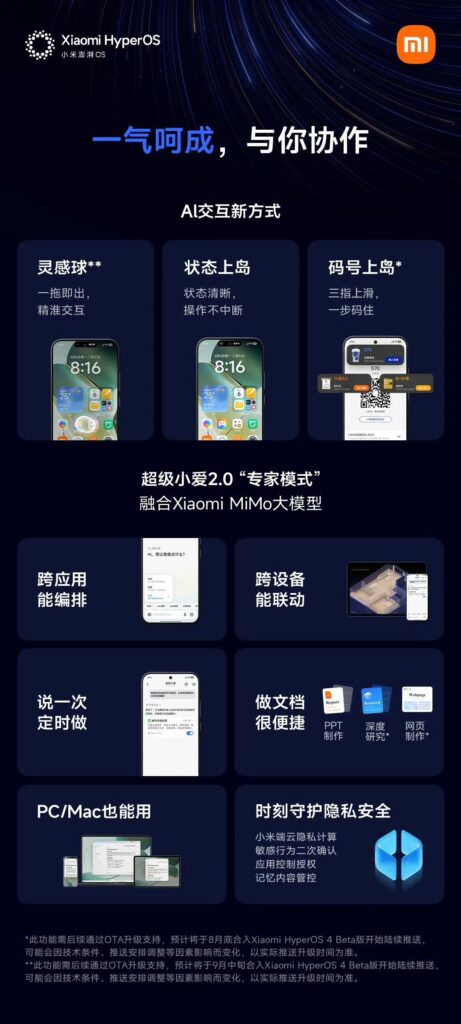
Apart from this, HyperOS 4 introduces a new Inspiration Ball that allows users to quickly interact with supported content through drag-based gestures.
There is also the Status Island, which can display information regarding ongoing activities without interrupting what the user is currently doing.
Another feature called Code/Number Island allows users to make use of a three-finger swipe gesture to quickly access supported codes, numbers and other recognised information.
Super XiaoAI 2.0
Another major highlight of HyperOS 4 is Super XiaoAI 2.0, which is powered by Xiaomi’s MiMo large model and introduces a new Expert Mode. The assistant is designed to handle more complex tasks across applications and devices rather than simply responding to individual commands.
It supports cross-app task orchestration, cross-device interactions and scheduled tasks through voice commands. Users will also be able to make use of document-related features, PPT creation, Deep Research and webpage creation.
Super XiaoAI 2.0 is also being extended beyond smartphones, with supported capabilities available across Xiaomi PCs and compatible Macs.
Privacy and Security
Xiaomi is introducing device-cloud privacy computing along with secondary confirmation for sensitive actions.
An app-control authorisation and options to manage or clear content stored through AI memory is also there in this update and these features become particularly important with Super XiaoAI gaining the ability to perform tasks across apps and access more user information.
Notably, some of the features mentioned above will not arrive with the first beta package and will instead be added through future OTA updates.
Xiaomi HyperOS 4 Beta Rollout Schedule
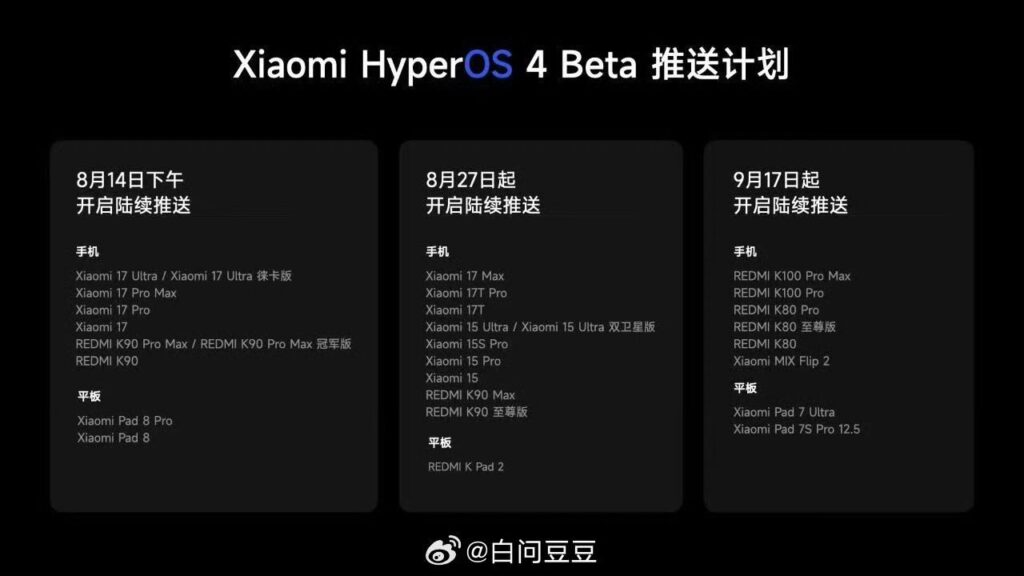
Speaking of the beta rollout schedule, Xiaomi will be rolling out HyperOS 4 in multiple batches in China.
Starting August 14th
- Xiaomi 17 Ultra
- Xiaomi 17 Ultra Leica Edition
- Xiaomi 17 Pro Max
- Xiaomi 17 Pro
- Xiaomi 17
- REDMI K90 Pro Max
- REDMI K90 Pro Max Champion Edition
- REDMI K90
- Xiaomi Pad 8 Pro
- Xiaomi Pad 8
The first group has already been officially listed as part of Xiaomi’s China beta programme.
Starting August 27th
- Xiaomi 17 Max
- Xiaomi 17T Pro
- Xiaomi 17T
- Xiaomi 15 Ultra
- Xiaomi 15 Ultra Dual Satellite Edition
- Xiaomi 15S Pro
- Xiaomi 15 Pro
- Xiaomi 15
- REDMI K90 Max
- REDMI K90 Supreme Edition
- REDMI K Pad 2
Starting September 17th
- REDMI K100 Pro Max
- REDMI K100 Pro
- REDMI K80 Pro
- REDMI K80 Supreme Edition
- REDMI K80
- Xiaomi MIX Flip 2
- Xiaomi Pad 7 Ultra
- Xiaomi Pad 7S Pro 12.5
The beta rollout is therefore expected to continue in stages through September 17th.
Features Coming Gradually to HyperOS 4 Beta
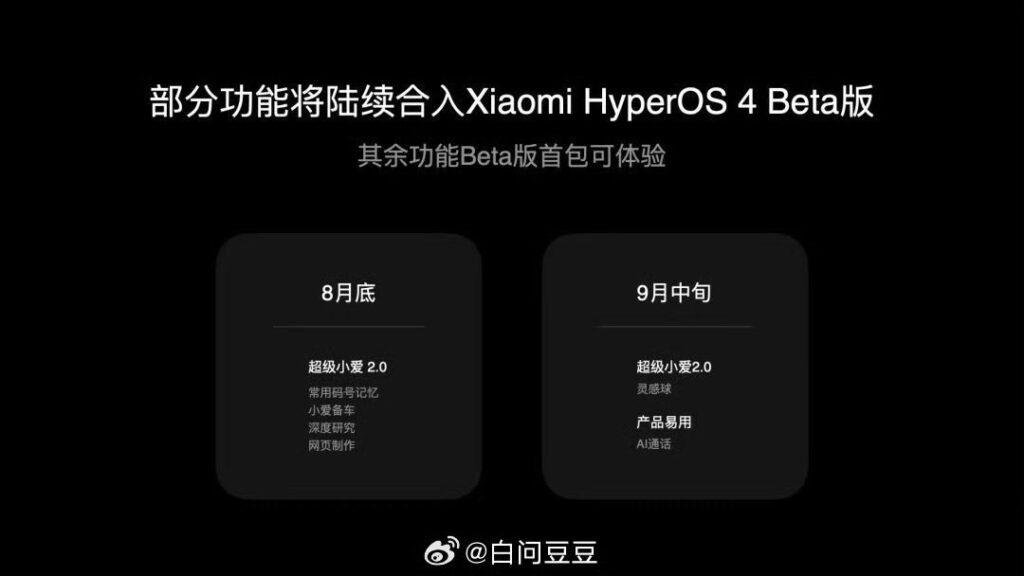
Apart from the features included with the first beta package, Xiaomi has also shared a timeline for some features that will be added gradually.
By the end of August
- Super XiaoAI 2.0
- Frequently used code/number memory
- XiaoAI Memo
- Deep Research
- Webpage creation
By mid-September
- Super XiaoAI 2.0
- Inspiration Ball
- Product usability improvements
- AI Calling
Other HyperOS 4 features are expected to be available with the first beta package itself, though their availability may vary depending on the device. Some advanced visual features such as the full Soft Light Glass effect are also limited by hardware requirements.
Xiaomi HyperOS 4 Beta – Rollout
The brand has not yet revealed when HyperOS 4 Beta will be expanded to global or Indian users, and it is not confirmed exactly when the stable HyperOS 4 rollout will happen.
Stay tuned for more updates!