


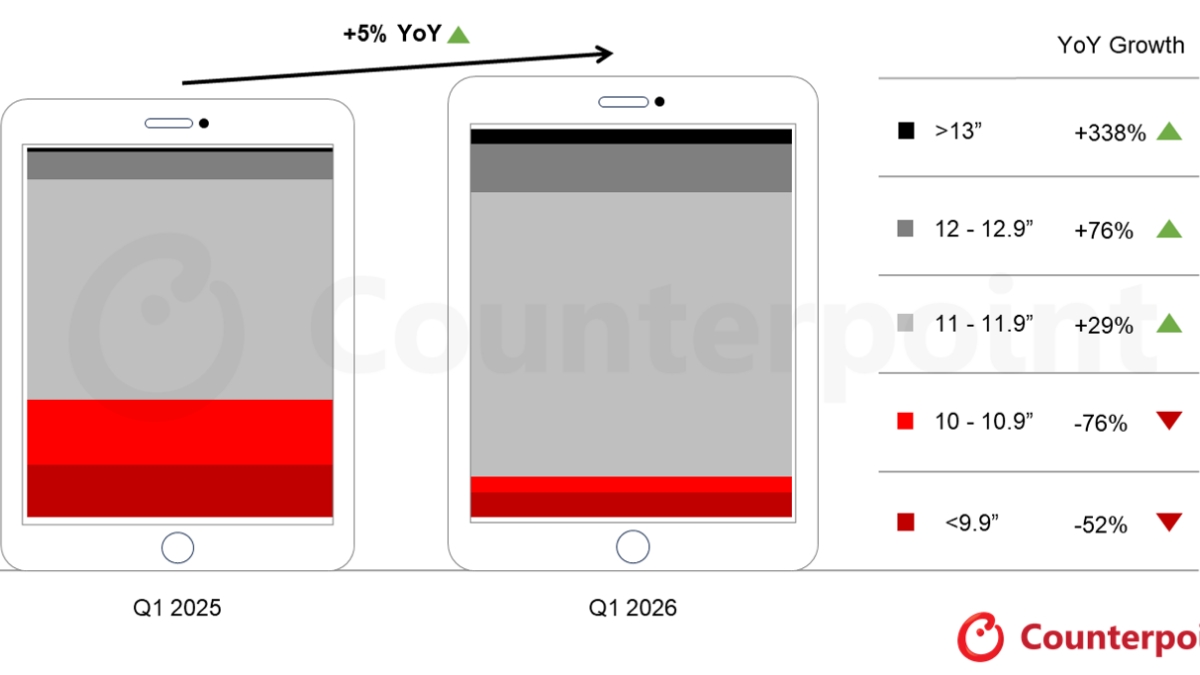
Currently, the tech market is facing a bit of a tough time due to rising memory prices and uncertain macroeconomic conditions. Still, the Indian tablet market seems to have flourished even after these conditions. According to a latest report by Counterpoint Research, India’s tablet market grew by 5% in Q1, 2026.
Indian tablet market grows by 5% in Q1, 2026
According to the report, the key reasons for this growth have been developments on both the demand and supply sides. On the demand side, consumers continue to have a growing inclination towards the larger screen sizes, 5G capabilities and higher configurations. On the supply side, domestic manufacturing has been growing strongly as more brands shift their portfolios towards localised products.
The Idea tab series by Lenovo and the Samsung Ultra series have shown decent performance over the quarters. The Q1, 2026, was essentially the launch period for Apple and Xiaomi, both of which launched at least one product with a larger than 12-inch display, further supporting the larger screen trend.
The domestic manufacturing expanded further, growing 61% YoY in volume terms. Samsung continues its strong lead in domestically produced tablets, Lenovo has pivoted its portfolio towards localised products, while Xiaomi and OnePlus have been benefiting from local production. Over the past few years, Realme and Oppo have also expanded their domestic manufacturing capabilities.
It is revealed that Lenovo has recaptured the second position in the Indian tablet market, while OnePlus has entered the top five list, driven by the strong performance of the Pad Lite and Go 2 series over the quarters.
Principal Analyst Anshika Jain said, “ Exports continue their expansion, reaching more than 200 thousand units during the quarter, with more brands like realme exploring the export market.”
In Q1 2026, the market experienced a double-digit increase in ASP. Though the memory cost inflation also affected the prices, its impact was relatively limited in the quarter. It is said that the rising memory price impact is expected to become more evident from Q2 as brands increase prices to manage margin and cost pressure.