


Healthcare has entered an era where patient care depends as much on digital infrastructure as it does on clinical expertise. Hospitals, diagnostic laboratories, insurance providers, pharmacies, and specialist clinics now exchange enormous volumes of medical information electronically, allowing physicians to access patient histories regardless of where treatment was previously received. This unprecedented level of interoperability has transformed healthcare delivery, enabling faster diagnoses, better care coordination, and improved patient outcomes.
Yet the same interconnected systems that make healthcare more efficient have also created an expanding cybersecurity challenge. As Electronic Health Records (EHRs) move seamlessly across multiple organizations, they often pass through software developed by different vendors, running on different programming languages and cloud environments. Although these systems follow the same interoperability standards, they do not always interpret clinical data in exactly the same way. Small differences in how software parses medical records may appear insignificant from a technical perspective, but in clinical environments, even minor inconsistencies can alter patient information, compromise data integrity, or expose sensitive medical records to unauthorized access.
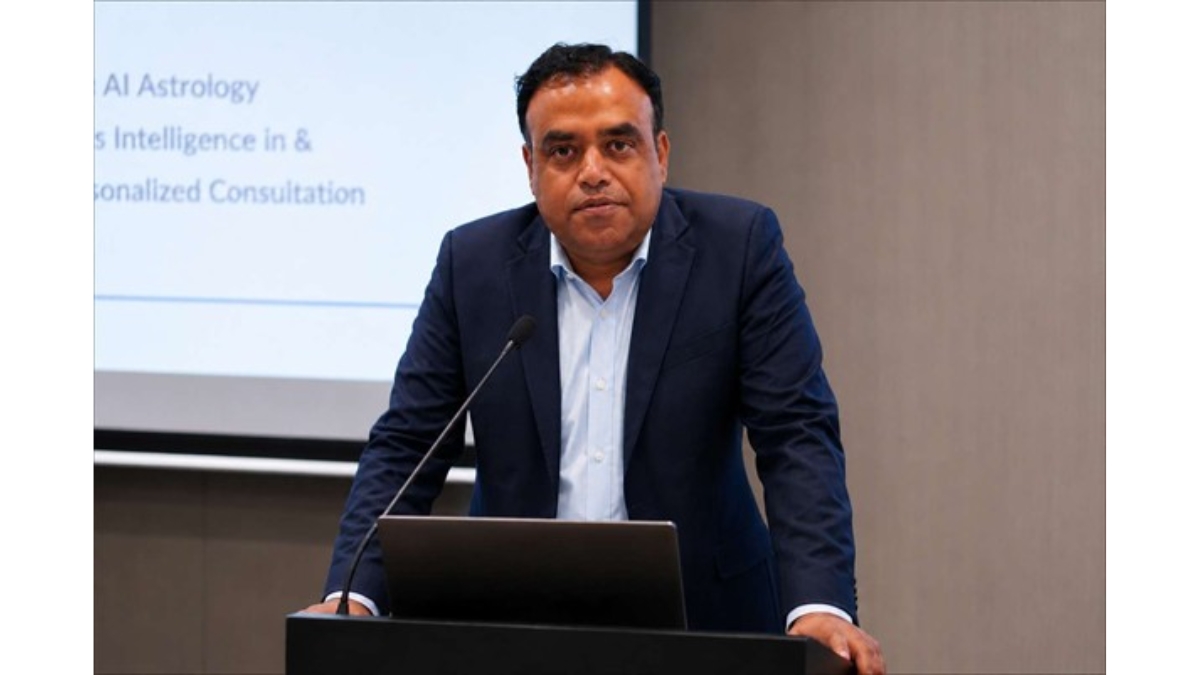
Recognizing this overlooked cybersecurity challenge, Jitendra Gupta has focused his research on one of the least visible—but increasingly important—areas of healthcare technology: ensuring that interoperable healthcare systems interpret clinical data consistently and securely before vulnerabilities can affect patient care.
The Hidden Complexity Behind Digital Healthcare
Modern healthcare increasingly relies on interoperability standards such as Fast Healthcare Interoperability Resources (FHIR), which allow independent healthcare systems to exchange patient information efficiently across organizational boundaries.
In principle, interoperability enables physicians to retrieve laboratory reports, medication histories, diagnostic imaging, vaccination records, and treatment plans regardless of where those records originated.
However, the reality is considerably more complicated. Every software vendor implements these standards independently. While each implementation may technically comply with the specification, differences in programming languages, parsing libraries, Unicode handling, numeric precision, and error recovery mechanisms can cause identical patient records to be interpreted differently by different systems.
This creates a subtle but significant cybersecurity problem. Instead of attacking hospital networks directly, malicious actors may exploit inconsistencies between software implementations, crafting patient records that one healthcare system accepts while another interprets differently or rejects entirely. Such parser differentials can create opportunities for unauthorized information disclosure, selective data manipulation, or corruption of clinically significant records. Gupta’s research brings attention to this emerging category of healthcare cybersecurity threats.
Looking Beyond Compliance
Much of today’s interoperability testing focuses on standards compliance.
Healthcare software vendors routinely verify whether systems conform to FHIR specifications and exchange data successfully. While these tests confirm functional compatibility, they often
overlook an equally important question:
Do different implementations interpret identical medical information exactly the same way?
Gupta’s research argues that interoperability alone does not guarantee security. Instead, true resilience requires understanding how different software implementations behave when confronted with malformed, ambiguous, or intentionally manipulated clinical data. His work shifts the conversation from simply exchanging information toward preserving the integrity of that information throughout its entire journey across distributed healthcare ecosystems.
Building the FHIR Garden
To investigate these challenges, Gupta developed a containerized testing framework known as FHIR Garden, designed to evaluate how different FHIR server implementations process identical healthcare records.
Rather than testing a single platform in isolation, the framework simultaneously analyzes multiple implementations developed using different programming languages and architectural approaches. By submitting the same patient data to each system and comparing their responses, the platform identifies subtle parsing inconsistencies that traditional interoperability testing may never detect.
The research employs differential fuzzing—a security testing methodology that systematically modifies valid healthcare records to generate thousands of controlled variations. These variations include malformed JSON structures, Unicode encoding changes, duplicate fields, numeric precision differences, and other boundary conditions that frequently expose implementation inconsistencies.
Instead of looking for conventional software bugs, Gupta’s framework identifies situations where two fully compliant systems disagree on how medical information should be interpreted. These disagreements form the basis of potential exploit chains capable of undermining the integrity of distributed healthcare networks.
Discovering Vulnerabilities That Matter
Applying the framework across seven widely used FHIR implementations produced significant findings. The research identified 59 parser differentials spanning multiple categories, including numeric precision handling, Unicode normalization, syntax error recovery, and structural data transformation. Although these inconsistencies originate within software implementation details, their potential consequences extend directly into clinical workflows.
Among the observed behaviors were timestamp stripping, mutation of vaccine descriptions, inconsistent handling of scientific notation, decimal truncation, and differing interpretations of malformed patient records.
Because clinical systems increasingly depend on automated decision support, preserving the exact meaning of patient data is essential. Even seemingly minor alterations to timestamps, medication descriptions, or laboratory measurements can influence downstream clinical processes.
The research also demonstrated how parser inconsistencies could be combined into exploit chains, allowing carefully crafted records to be accepted by some healthcare systems while being rejected by others. In distributed health information exchanges, these inconsistencies may enable selective transmission, unauthorized disclosure, or corruption of sensitive medical information.
Strengthening Healthcare Cybersecurity
One particularly significant aspect of Gupta’s research extends beyond parser behavior itself. Through infrastructure reconnaissance, the study identified more than a thousand publicly accessible FHIR servers, many of which implemented limited authentication controls. This observation highlights a broader concern: as healthcare organizations rapidly expand cloud-based interoperability, security governance may not always evolve at the same pace. Rather than suggesting weaknesses in interoperability standards themselves, Gupta’s work emphasizes the importance of secure implementation.
Interoperability is essential for modern medicine, but consistent implementation, rigorous verification, and continuous security assessment are equally critical to preserving patient trust and clinical safety.
Engineering Security Into Interoperability
Gupta’s research proposes that future healthcare interoperability should incorporate security verification throughout the software development lifecycle instead of relying exclusively on post-deployment audits.
Frameworks like FHIR Garden provide developers with an opportunity to detect implementation inconsistencies before software reaches production environments. By comparing parser behavior continuously during development and deployment, healthcare organizations can identify emerging vulnerabilities long before they affect patient care.
The work also advocates stronger implementation guidelines, enhanced parser certification, runtime integrity verification, and security-aware interoperability standards capable of addressing semantic consistency rather than functional compliance alone.
Looking Ahead
Healthcare technology continues to evolve toward increasingly interconnected ecosystems powered by cloud computing, artificial intelligence, remote diagnostics, and digital patient services.
As these systems become more distributed, ensuring that every participating platform interprets clinical information consistently will become as important as protecting networks from external cyberattacks. Future cybersecurity strategies are therefore likely to extend beyond firewalls and encryption toward continuous verification of how information itself is processed throughout complex digital ecosystems.
Jitendra Gupta’s work contributes meaningfully to this evolving landscape by highlighting an
often-overlooked dimension of healthcare security: protecting not only access to medical information, but also the integrity of its interpretation. In doing so, his research reinforces a fundamental principle of modern digital healthcare. True interoperability is not simply about enabling systems to communicate—it is about ensuring they communicate accurately, securely, and consistently every time patient care depends on them.