

Samung Galaxy S26 Shows Up on FCC with Wi-Fi 7, Tested Using an 18W Charger

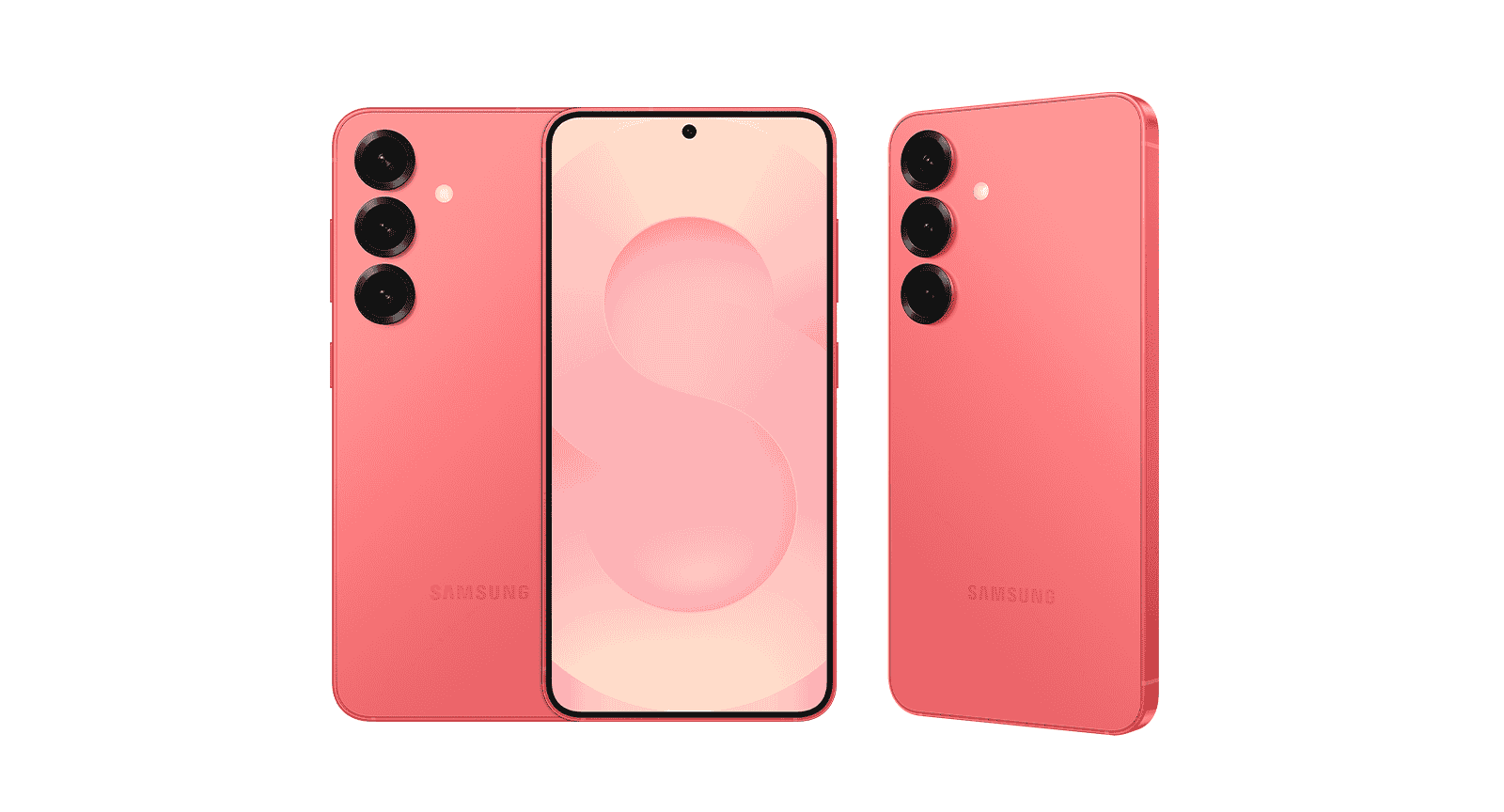
Earlier, the Samsung Galaxy S26 Ultra was spotted on the FCC database, revealing several key specifications. Now, the Galaxy S26’s US variant has also appeared on the FCC certification platform, confirming more details about the upcoming flagship models.
Here’s everything revealed so far.
Samsung Galaxy S26 (US Variant) Spotted on FCC
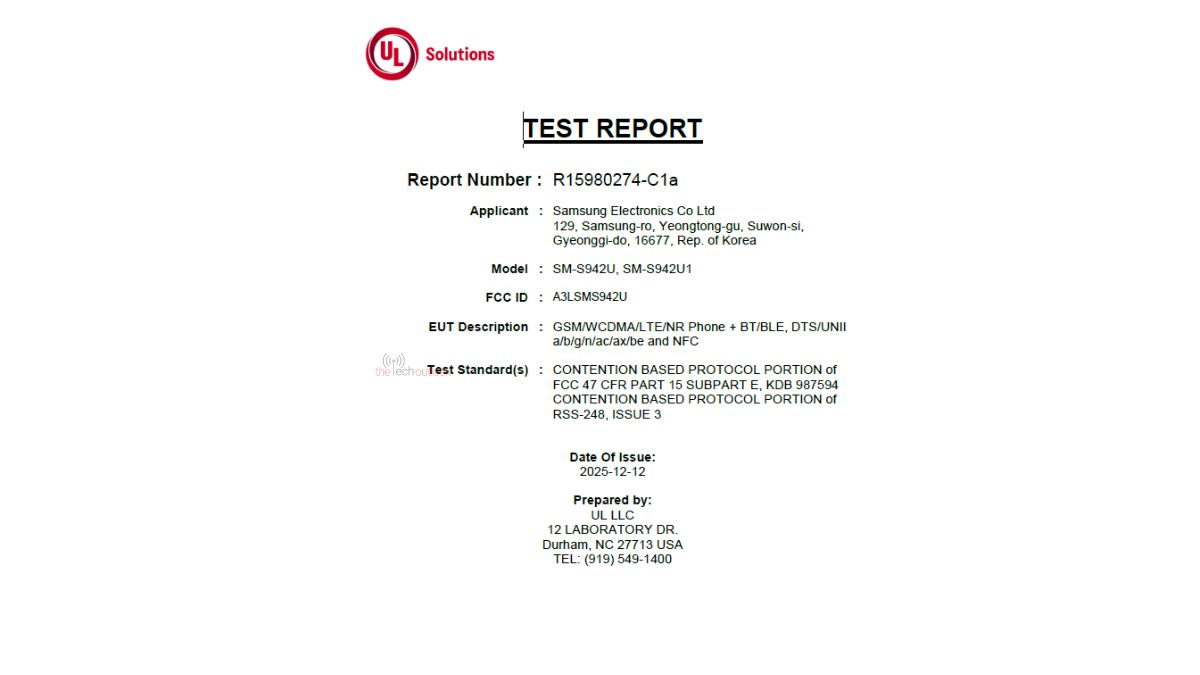
The FCC filing lists the applicant as Samsung Electronics Co., Ltd (South Korea) and confirms the US Variant model numbers SM-S942U and SM-S942U1, both carrying the FCC ID A3LSMS942U. The device under testing is described as a GSM/WCDMA/LTE/NR (5G) smartphone with support for Bluetooth LE, Wi-Fi (802.11 a/b/g/n/ac/ax/be), and NFC. This confirms that the Galaxy S26 will support next-generation Wi-Fi 7 (802.11be) as well.
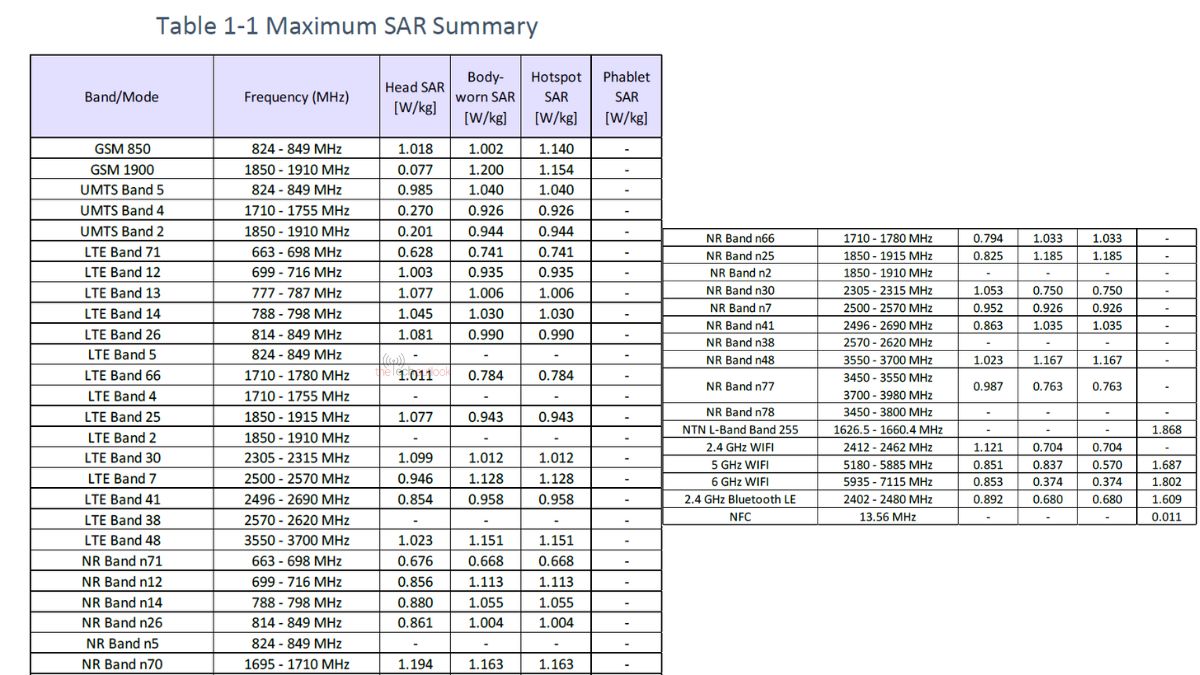
The listing also confirms Wi-Fi operation across the 2.4GHz, 5GHz, and 6GHz bands, along with Bluetooth LE and NFC support. In addition, testing has been recorded for NTN (satellite) band n255, which suggests that satellite connectivity support could be present on the device. The accompanying FCC test setup documentation further reveals that testing was conducted using a Flextronics G-1000-US power adapter connected via a shielded USB-C cable.
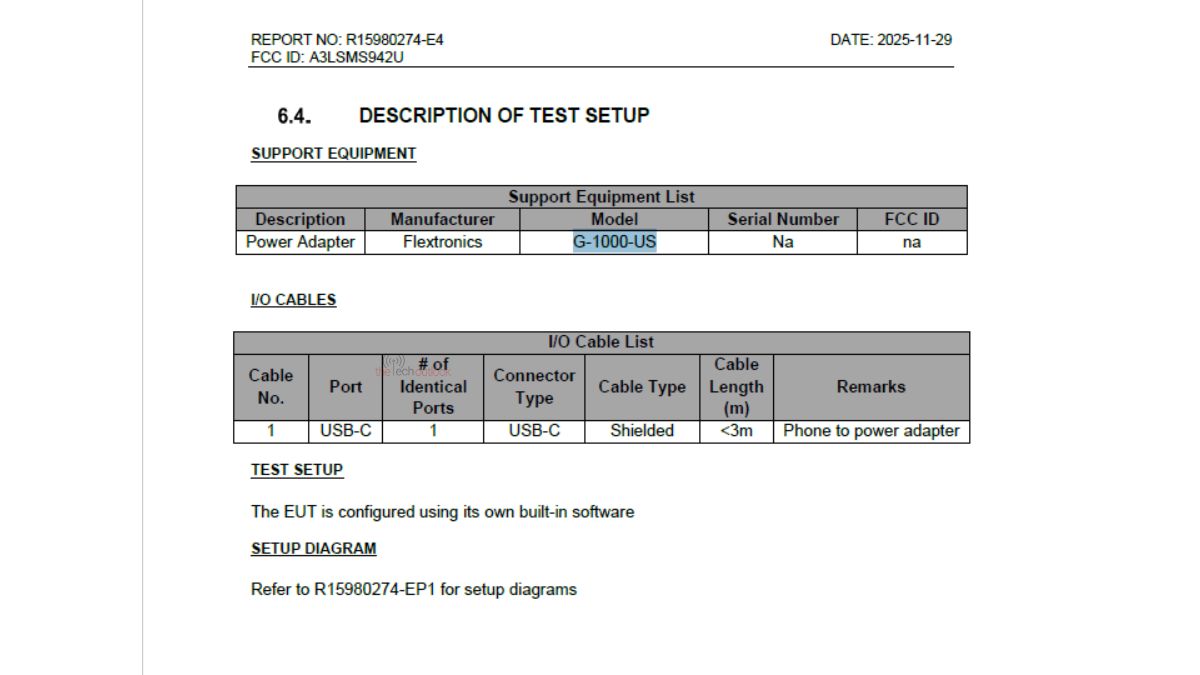
This is where things become a bit unclear. Some earlier rumours suggested that the vanilla Galaxy S26 would feature 45W fast wired charging support. However, the FCC documentation shows the device being tested with a Flextronics G-1000-US power adapter, which is an 18W charger. Adding to the confusion, another tipster recently claimed that the Galaxy S26 may instead come with 25W fast wired charging, unlike the Galaxy S26+ and Galaxy S26 Ultra, which are expected to support higher charging speeds. For now, Samsung’s final charging configuration remains unconfirmed.
In a recent Geekbench listing, the same US variant reportedly appeared with the Snapdragon 8 Elite Gen 5 SoC, Android 16, and 12GB of RAM. As for its launch timeline, current rumours point towards a late February unveiling, both in the US and globally.

