

Samsung Galaxy S26 Ultra’s native hardware privacy screen technology explained

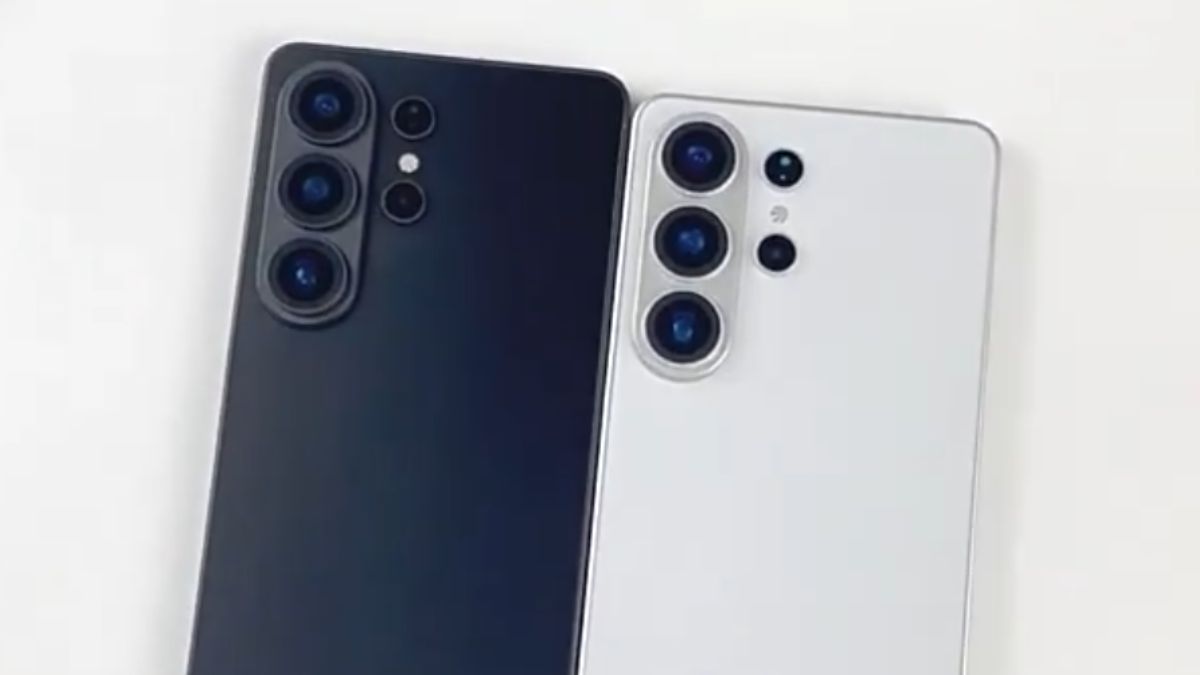
The South Korean tech giant Samsung will be conducting its Galaxy Unpacked 2026 event this week on 25th February. The company is expected to unveil its Galaxy S26 series and Galaxy Buds 4 series at this event. The pre-reservations for the upcoming Galaxy devices have started in India via Flipkart, Amazon and the Samsung India website.
A lot has been revealed related to the Galaxy S26 series till now. Previous reports suggested that the Galaxy S26 Ultra may arrive with a Privacy Display feature that is said to limit screen visibility from side angles to protect the user’s privacy in public. Recently, Samsung has also officially teased this feature.
Ahead of the upcoming launch event, tipster @UniverseIce has explained the Galaxy S26 Ultra’s Native Hardware Privacy Screen technology.
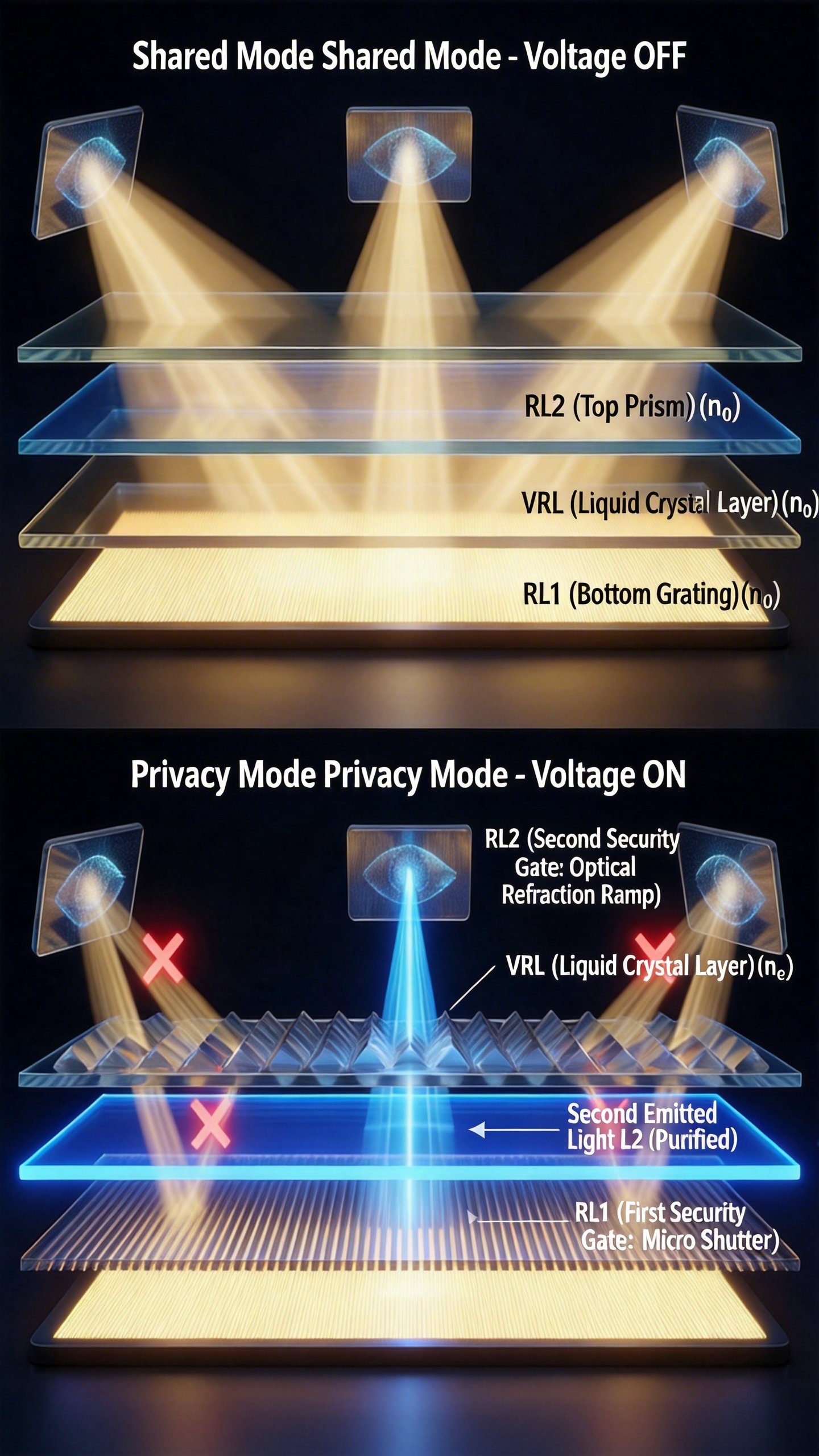
The above diagram showcases the dual-gate system of this technology. The first security gate is Micro “Louvers” (Bottom Grating). The light emitted by the OLED screen originally scatters in all directions. Before enabling Privacy Mode, the first security gate is completely invisible because the refractive indices across all layers are exactly the same, and all light passes through freely, allowing the person next to you to see the screen clearly.
But after you enable the Privacy Mode (Voltage On), the liquid crystal layer instantly changes state, causing a sudden shift in its refractive index. At this moment, the microscopic grating (Diffraction structure) carved into the surface of the first refractive layer reveals itself, acting like a series of microscopic “louvers.” Those light rays trying to escape at wide angles to the left and right (the first exit) are forced to change their path (undergoing diffraction) as they pass through these louvers, deviating from their original trajectory.
Then the security gate is Optical Refraction Slopes (Top Prism/Lens)– the light rays, having had their paths scrambled by the first gate, immediately crash into the optical structure (Prism or Lens) at the top of the refractive index conversion layer.
The Snooper’s light (wide-angle light rays originally destined for the snooper’s eyes) hit the prism slopes at extremely awkward angles. Because there is now a refractive index difference between the liquid crystals and the top refractive layer, this portion of light cannot penetrate the screen surface. Instead, it gets severely distorted or totally internally reflected, bouncing right back into the screen. So, to anyone sitting next to you, the screen looks completely blank.
The Owner’s Light (light rays heading straight forward) not only penetrate the prism slopes, but due to the optical refraction effect, its exit angle is further “squeezed” and compressed. This means the screen remains crystal clear when viewed head-on, but the effective viewing angle becomes extremely narrow, offering perfect privacy protection.
The Galaxy fans seem to be quite excited about this all-new privacy feature, and the company is expected to share details about this feature in the upcoming Galaxy Unpacked event.
Stay tuned with The Tech Outlook for the latest updates.
