


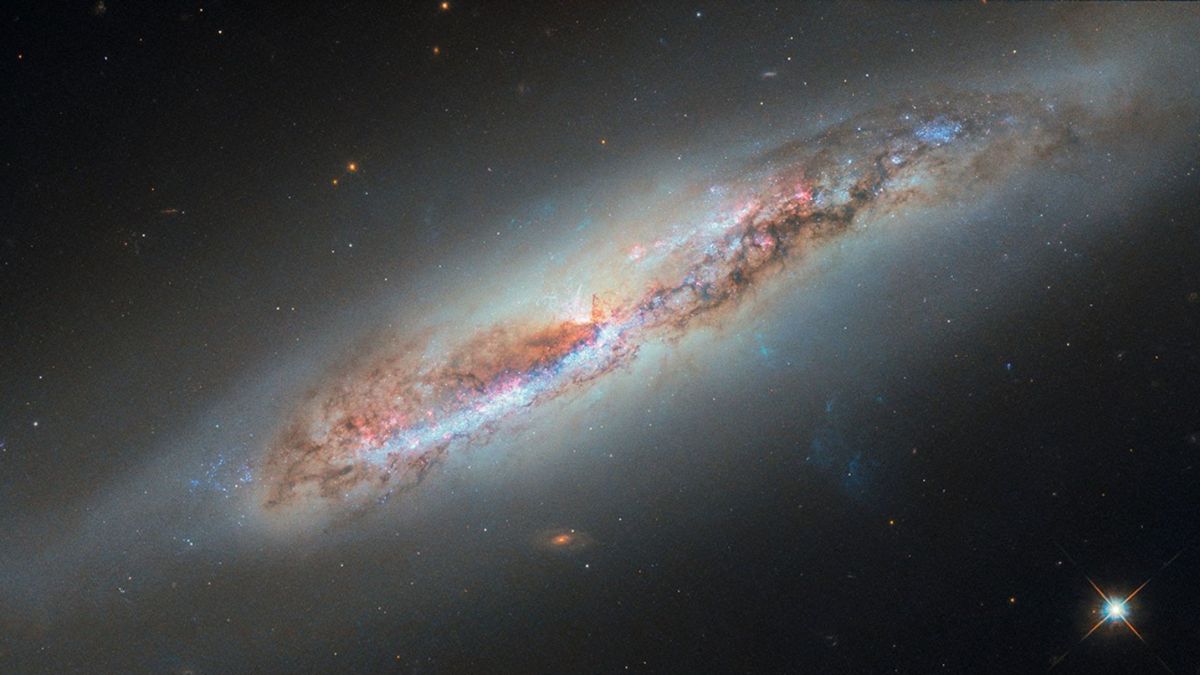
Yesterday, NASA revealed a fresh Hubble Space Telescope image of the galaxy NGC 4388, which reveals a curious feature.
Notice anything different about me? 👀
This @NASAHubble picture of the galaxy NGC 4388 reveals something not previously visible in previous images of it—a plume of gas reaching out towards the bottom-right corner of the image. Learn more: https://t.co/y0jXxkON5u pic.twitter.com/G09qktHE4a
— NASA (@NASA) December 20, 2025
The galaxy NGC 4388 is located about 60 million light-years away in the constellation Virgo (the Maiden). The new image reveals a new feature about the NGC 4388, which was not revealed in the previous Hubble image of this galaxy.
A plume of gas from the galaxy’s nucleus is seen billowing out from the galaxy’s disk toward the lower-right corner of the image. Mentioning this outflow and why it glows, NASA has revealed that the answer likely lies in the vast stretches of space that separate the galaxies of the Virgo Cluster. Though the space between galaxies appears empty, this space is occupied by hot wisps of gas called the intracluster medium. As NGC 4388 moves within the Virgo cluster, it plunges through the intracluster medium. The pressure from hot intracluster gas whisks away gas from within NGC 4388’s disk, causing it to trail behind as NGC 4388 moves.
The reason behind the glow of this gas cloud is still not known, but researchers suspect that some of the energy comes from the center of the galaxy, where a supermassive black hole spins gas around it into a superheated disk. Meanwhile, the blazing radiation from this disk might ionize the gas closest to the galaxy, while shock waves might be responsible for ionizing filaments of gas farther out.
