

NASA Hubble Space Telescope Captures the Sharpest Picture of the 3I/ATLAS Comet, Allowing Astronomers to Estimate its Size and Physical Properties

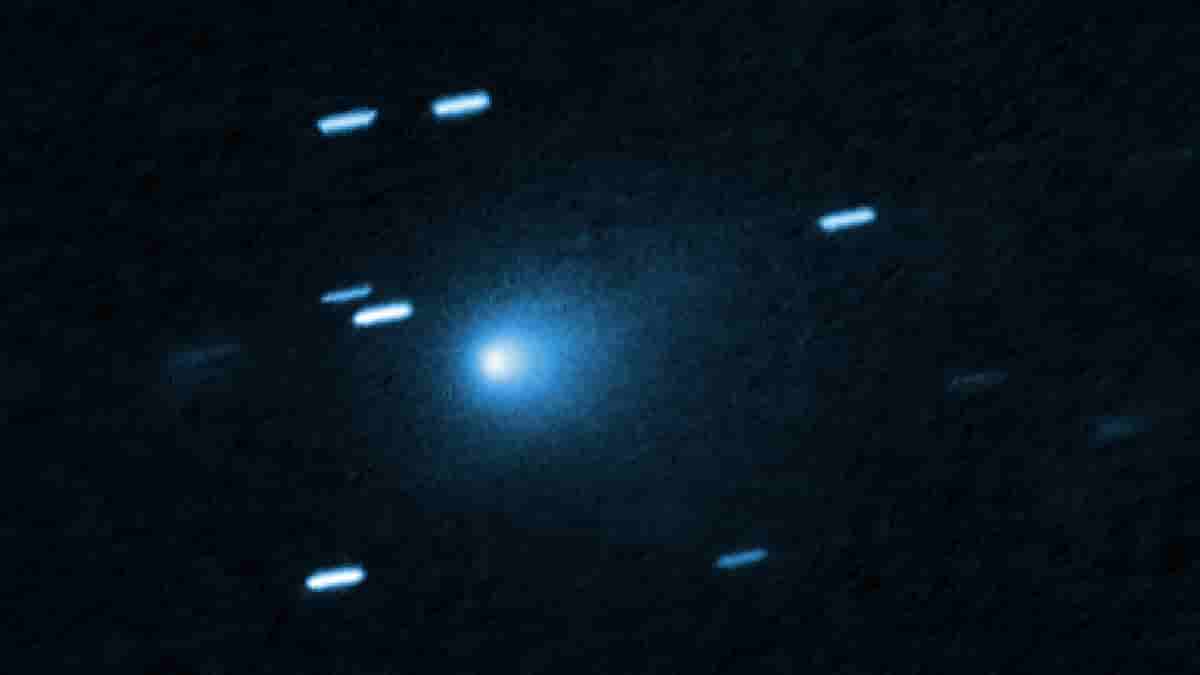
Early last month on the 1st of July 2025, the NASA-funded ATLAS (Asteroid Terrestrial-Impact Last Alert System) had discovered the interstellar comet – 3I/ATLAS (~ at 420 million miles from Sun) and now, the Hubble Space Telescope of the American space agency has captured the sharpest ever picture of this comet. With the picture captured thanks to NASA’s Hubble mission, more information concerning the mentioned comet’s size and physical properties have been estimated by astronomers.
Read more about it below.
3I/ATLAS Comet – Sharpest Ever Picture Reveals its Size and Physical Properties
While it does not poses any sorts of threat to Earth, as part of NASA’s continued research to understand near-Earth objects, astronomers with the Hubble observation have been able to estimate the size of the 3I/ATLAS comet’s solid and icy nucleus. As per what has been revealed, the upper diameter limit of the nucleus is mentioned to be 3.5 miles or 5.6 kilometers long, and 1000 feet or 320 meters short across.
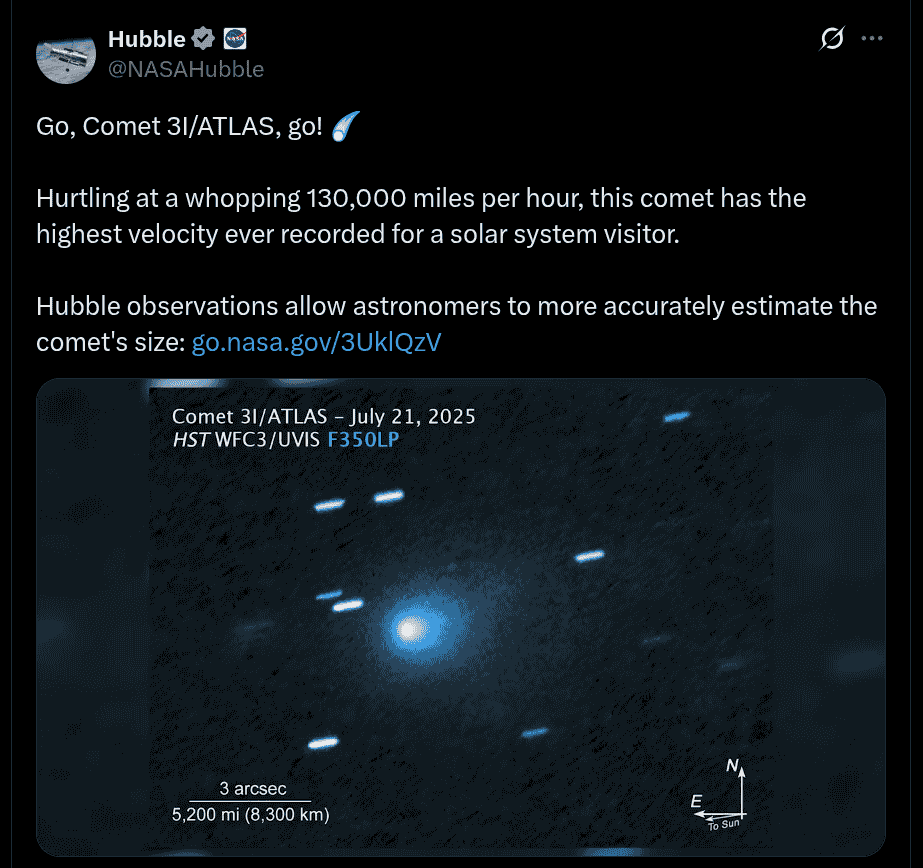
Additionally, Hubble also pointed out the dust plume that is being ejected from the comet’s sun-warmed side, as well as to the dust tail streaming from the nucleus. Unlike other similar comets, what makes 3I/ATLAS peculiar is that this comet has originated from a different solar system and not within the Milky Way.
Speaking more, the speed at which the 3I/ATLAS comet is travelling is also revealed to be 130,000 miles per hour and notably, this is the highest recorded for such a comet visiting our solar system. Furthermore, this has also suggested that this comet has been travelling for billions of years and the gravitational slingshot effect together with the time it has been travelling have added to its speed – which might increase in the future as long as it stays travelling.
Stay tuned for more updates.
