

NASA Hubble Captures New Image of the Spiral Galaxy M96: Its Asymmetrical Appearance Revealed to be a Result of ‘Galactic Tug-of-War’

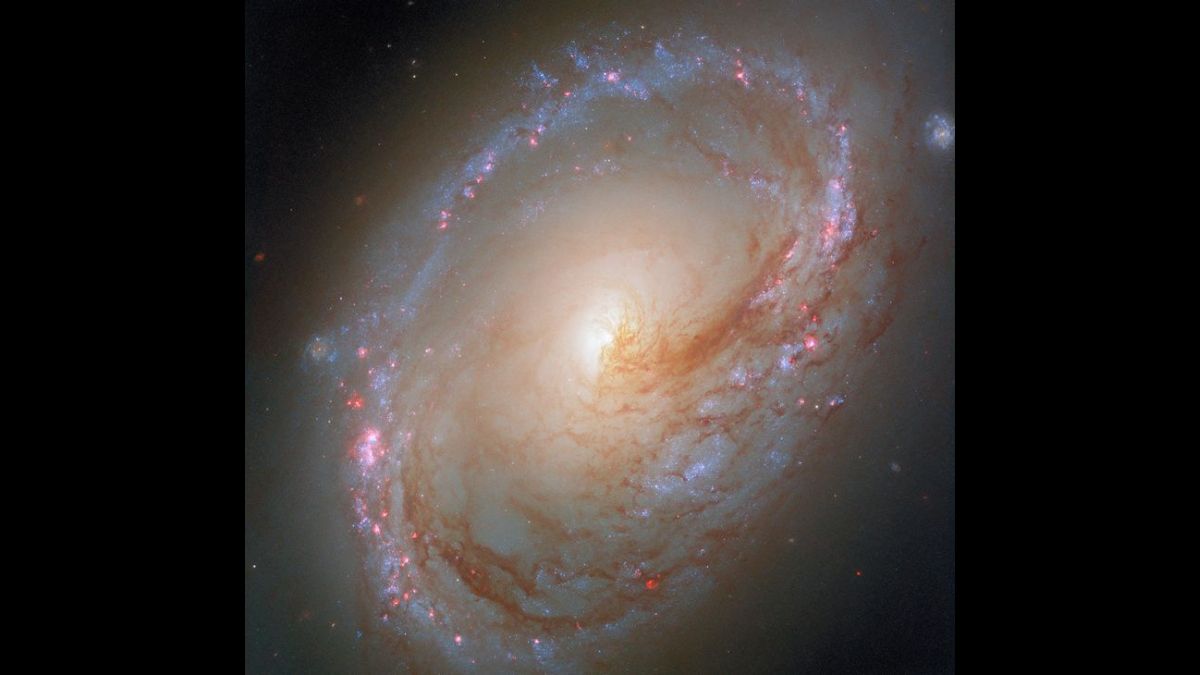
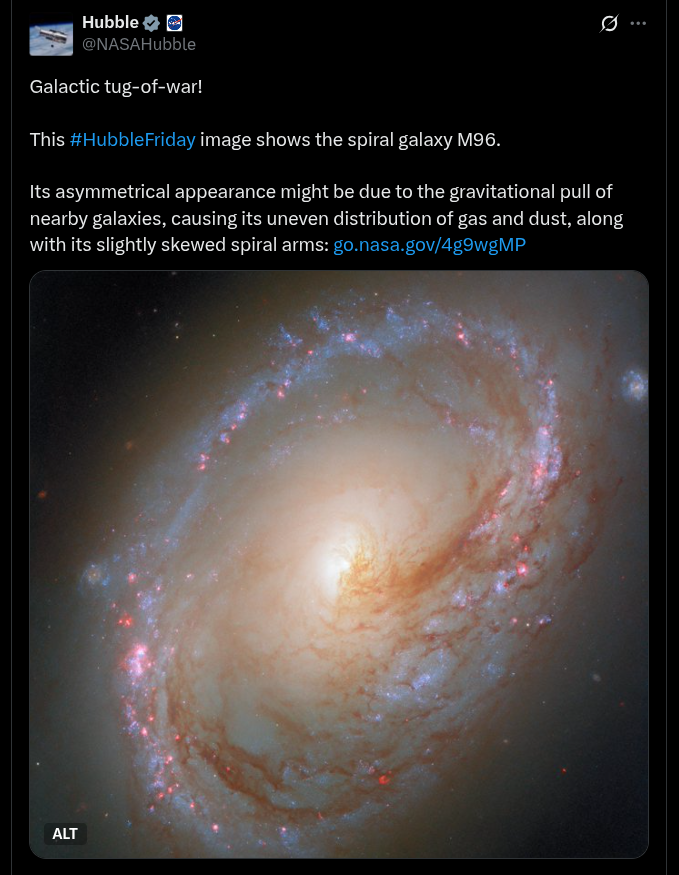
After 2015 and 2018, NASA’s Hubble telescope has captured a new image of the M96 spiral galaxy, and the newly-captured image has revealed new details concerning its star formation. Also, the asymmetrical appearance that the M96 has could be a result of the ‘galactic tug-of-war’ as noted in the officially shared X post.
Here’s more about the update.
Hubble-Captured M96 Image Reveals More Details About the Spiral Galaxy
The M96 spiral galaxy (Messier 96) that is 35 million light years away is located in the constellation – Leo, and it is considered to be the brightest galaxy of its group. As per new findings via the Hubble-captured image, it has now been speculated that the gravitation pull from its galactic neighbors could be a reason for its uneven distribution of gas and dust, off-center galactic core, and asymmetric spiral arms.
Previously, two other images of the M96 galaxy was captured and as per which, details pointing out the asymmetrically spread gas and dust, weak spiral arms, off-center core, cloud formed with heat from stars, and formation of high-energy young stars were identified. The new image that has now been captured adds to these details and reveals a different perspective.
Regions of ionized hydrogen (H-alpha) and nitrogen (NII) have been spotted, and these new details have helped astronomers in determining the galaxy’s environment as well as the star formation conditions and rate. Furthermore, the properties of gas between the stars can also be understood, and researchers can now determine whether the galaxy is a starburst galaxy or a galaxy that consist of an active galactic nucleus thanks to the newly-captured image.
Stay tuned for more updates.
