


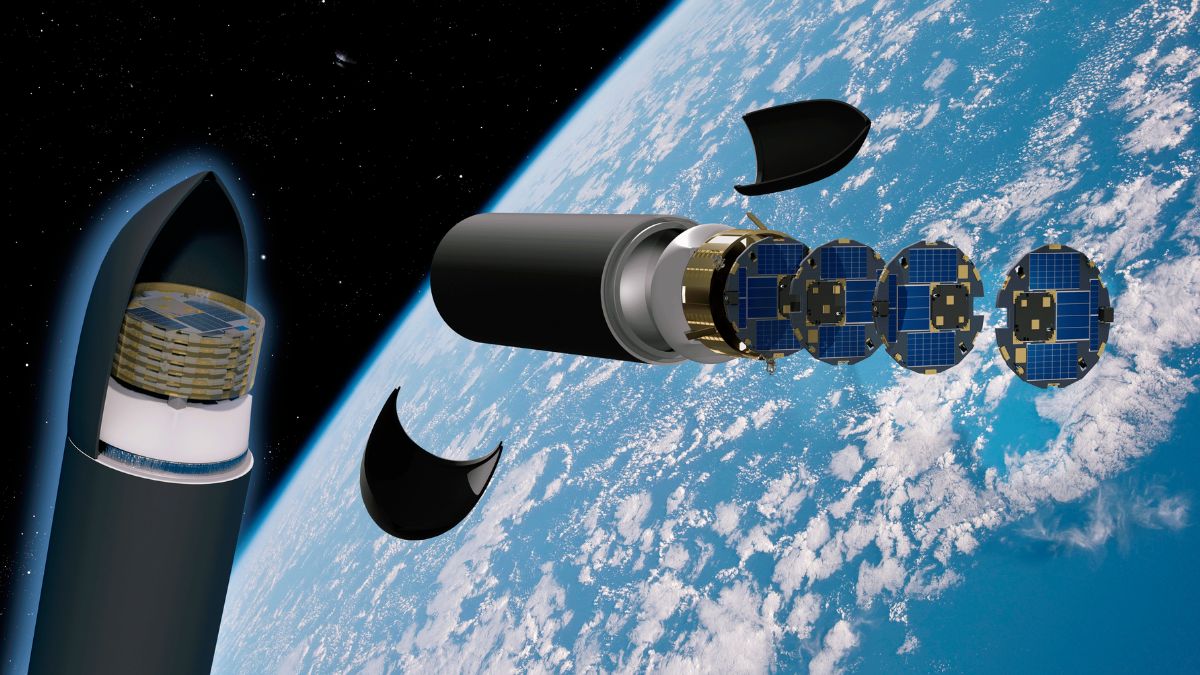
In order to test a new spacecraft design and technology, NASA had announced that it will be launching its new DiskSat spacecraft yesterday, and the launch was successfully completed. The set of four spacecrafts has reached the Low Earth Orbit, and the mission is now live.
Read more about the update below.
NASA’s DiskSat Launch Successful!
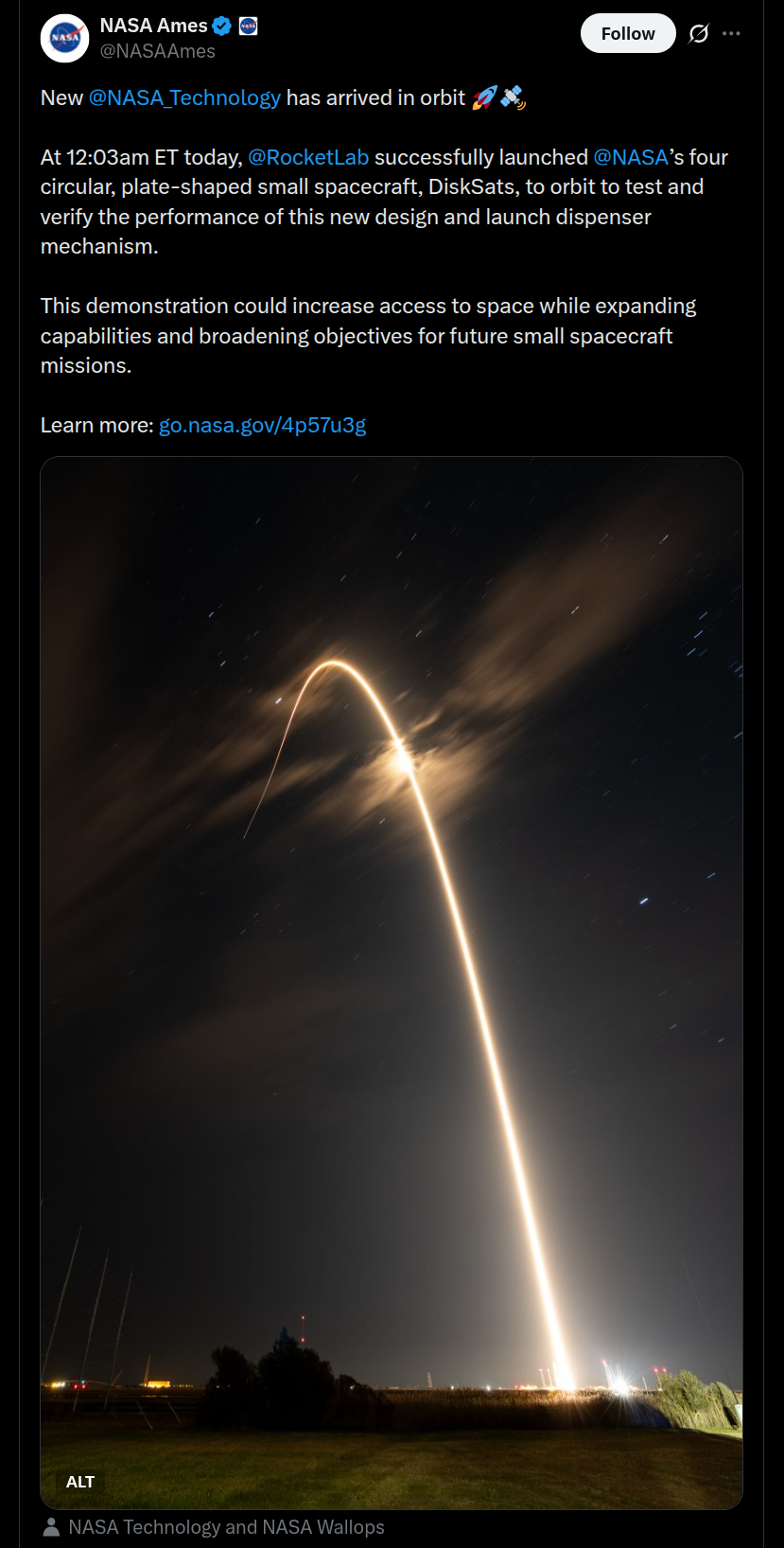
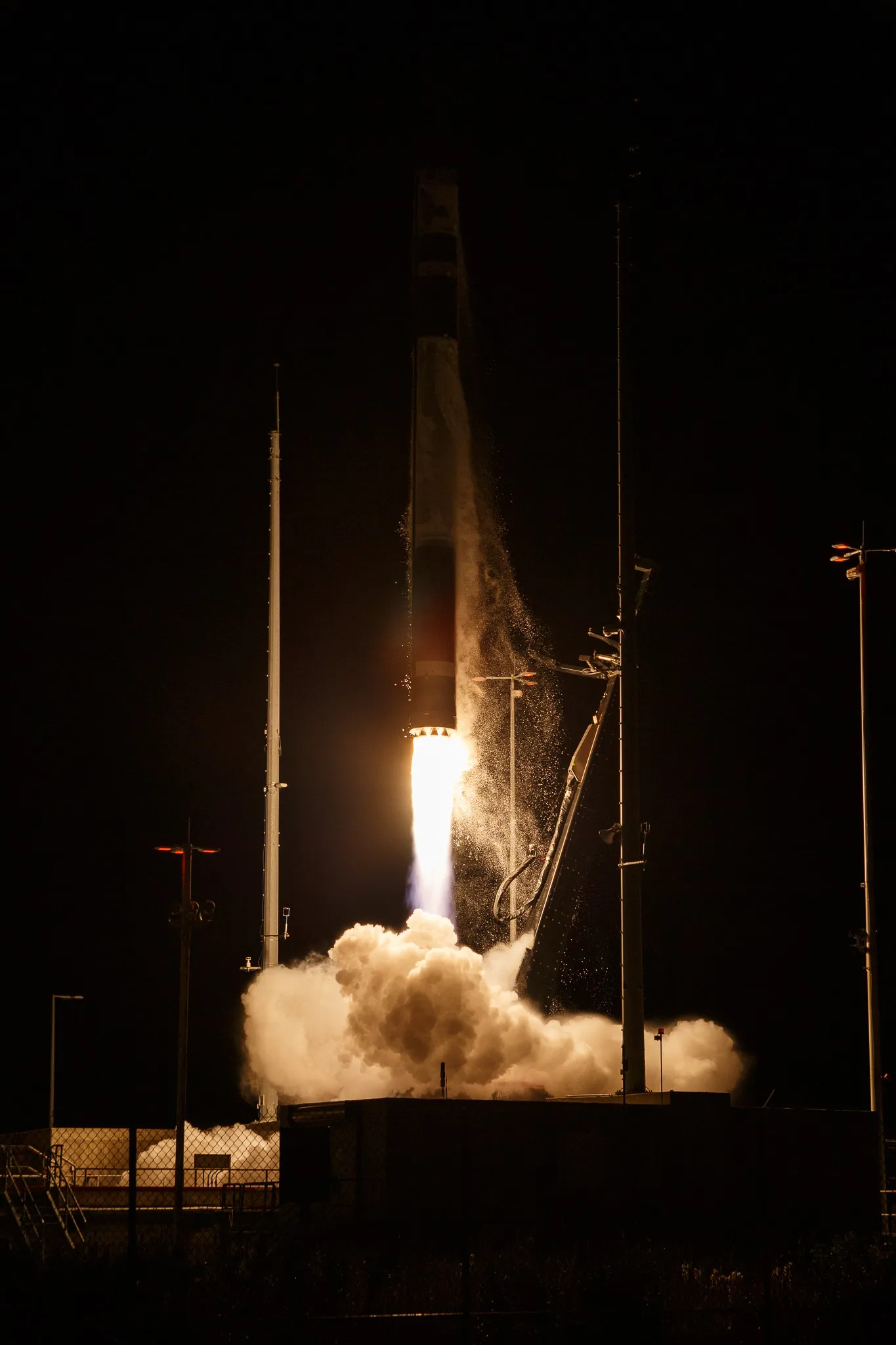
On the 18th of December 2025, at 12:03 AM EST, the new DiskSat spacecraft (set of four) from NASA was launched, and a Rocket Lab Electron rocket was relied on for this mission. The take-off took place at the Launch Complex 2 located on Wallops Island, Virginia. The launch was successful, and the four plate-shaped circular small spacecraft set has reached the Low Earth Orbit (LEO). This ongoing mission aims to test the performance of the new small spacecraft design over the conventional CubeSat design, thereby further contributing towards conducting lower-cost space missions in the future, broaden the scope for scientific opportunities, and also increase the overall space access. In addition to the DiskSat performance, the specialized dispenser mechanism will also be tested and evaluated.
Speaking more, each of the DiskSat as mentioned is circular and plate-like in appearance, and has a diameter of 40″ (1m), along with 1″ thickness (2.5cm). Notably, each of them also has an electric propulsion system too, and it will allow them to change orbits and maintain it. Sharper Earth imaging, sensing capabilities, and lower latency communications are also among its other features. Regarding the dispenser mechanism, it has been engineered in such a way to both securely contain the DiskSat spacecraft during launch and later deploy it sequentially once it reaches the Low Earth Orbit.
NASA states that the DiskSat spacecraft will be boosting the commercial space opportunities of the US, and also offer flexibility to pursue and achieve space goals easier, faster, and in a more affordable manner. It will also be supporting the long term goals of NASA too, particularly with respect to the sustained exploration of the Moon and Mars, and also with gaining more understanding about the Earth itself.
