

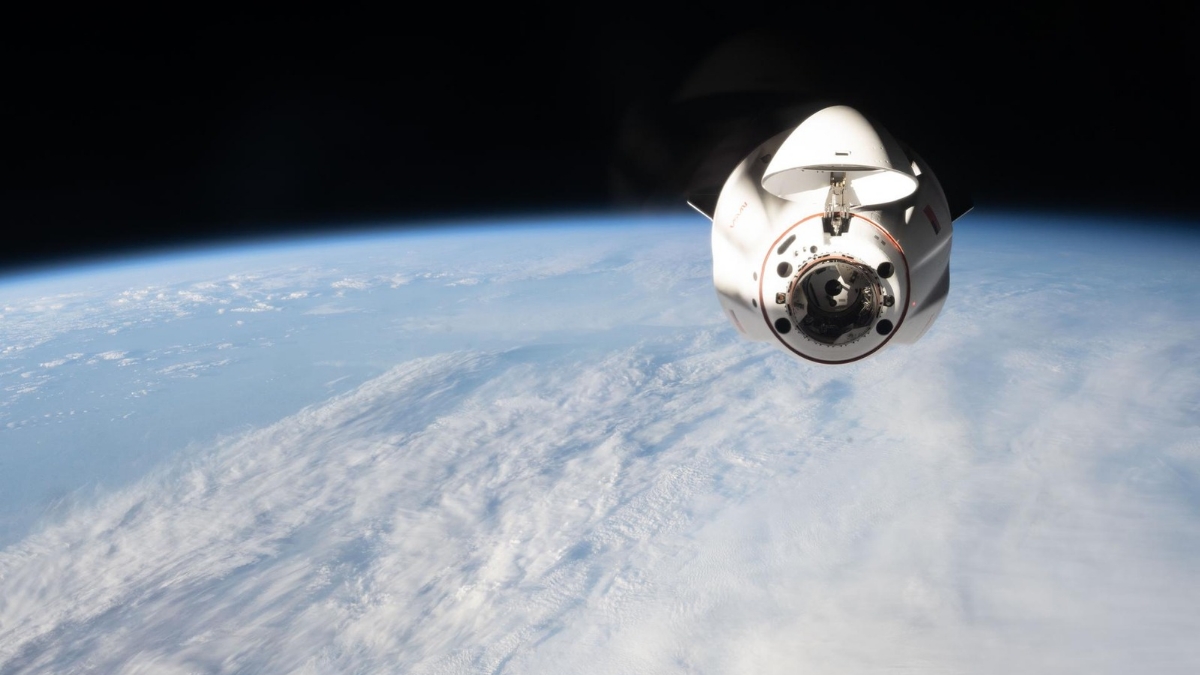
The SpaceX Dragon spacecraft has recently delivered several new experiments to the International Space Station, including a project to determine how well Earth-based simulators mimic microgravity conditions, a bone scaffold made from wood that could produce new treatments for fragile bone conditions and equipment to help researchers evaluate how red blood cells and the spleen change in space.
It is revealed that the Expedition 74 Crew is now working on some experiments.
The @SpaceX Dragon delivered a host of space experiments on May 17, 2026, the crew is now working on. Some of the new studies will take advantage of weightlessness to develop advanced treatments for Earth ailments and space-caused conditions. More… https://t.co/udawFdgvYL pic.twitter.com/IGE3LkJBa2
— International Space Station (@Space_Station) May 20, 2026
The newest investigation will explore how living in microgravity affects blood-making cells, or blood platelets, at the cellular and genetic level. Researchers will observe the cells growing into platelets to understand how weightlessness affects a crew member’s blood clotting and immune function.
Observations from the experiments are said to expand the knowledge of space phenomena and inspire junior high and high school students to consider scientific, technical and engineering careers.
Roscosmos cosmonauts Sergey Kud-Sverchkov and Sergey Mikaev have also collected their blood pressure measurements, helping doctors understand how weightlessness affects a crew member’s blood vessels.
The Expedition 74 Crew explored advanced treatments for cancer and cartilage injuries using the weightless environment to gain new biomedical insights.
NASA flight engineer Chris Williams set up the cancer research hardware inside one of the Kibo laboratory module’s research racks to begin observing microgravity’s effect on an anti-cancer drug and its molecular mechanisms. Results may lead to the development of more effective therapies to treat pancreatic cancer both on Earth and in microgravity.
NASA flight engineer Jessica Meir is exploring ways to grow cartilage tissue in space using specialised hardware to form more natural structures. Meir processed and preserved cartilage samples—grown on Earth and launched aboard Dragon—inside Kibo’s Life Science Glovebox. The tissue samples will be incubated inside the Space Automated Bioproduct Laboratory to learn how to improve cartilage tissue engineering methods in weightlessness. Insights may provide new fitness regimens to protect astronaut health and promote the development of advanced implants to repair and regenerate injured cartilage in patients on Earth.