

Experimental Advanced Superconducting Tokamak (EAST) or the ‘Artificial Sun’ Experiment of China Identifies How to Surpass the Plasma Density Limit

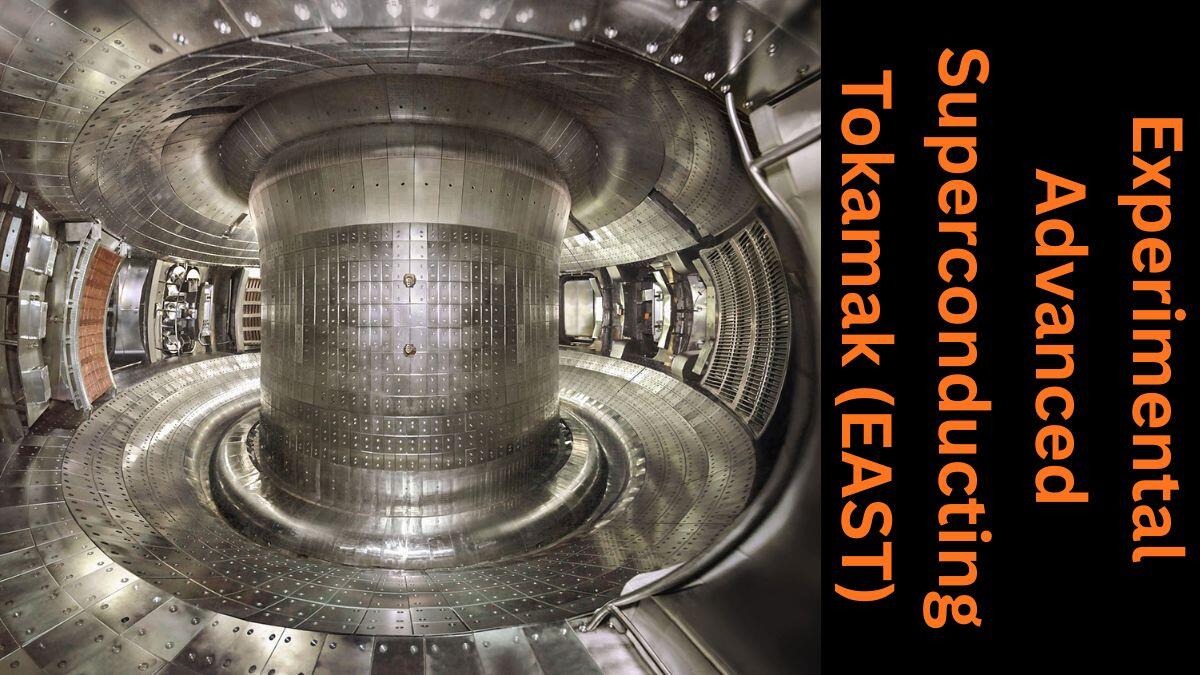
Thanks to the ongoing Experimental Advanced Superconducting Tokamak (EAST) experimental project, which is also being called as China’s Artificial Sun experiment, researchers have been able to identify a way to surpass the plasma density limit. Notably, the results of this experiment have provided a crucial physical basis for the high density operation in magnetic confinement fusion devices.
Read more about it below.
Chinese Researchers Find a Way to Surpass the Plasma Density Limit
The Experimental Advanced Superconducting Tokamak (EAST) or the Artificial Sun experiment is being conducted under the collaborative efforts from the Chinese Academy of Sciences (CAS), Huazhong University of Science and Technology (HUST), Aix-Marseille University (amU) in France, and more at the Institute of Plasma Physics, Hefei Institutes of Physical Sciences, and researchers associated with this experimental project has found a way to surpass the plasma density limit.
Speaking more, the tokamak that resembles a helical-shaped magnetic racetrack, is a toroidal device which makes use of magnetic confinement in order to achieve controlled nuclear fusion, and plasma density is considered to be a crucial factor that affects the performance of the tokamak. Researchers have already identified that there is an upper limit for the plasma density, and once it hits this limit, the plasma escapes the magnetic confinement by becoming unstable. Additionally, it has also been understood with long-term research that the physical reasons triggering the plasma density limit occur at the plasma-wall boundary region, however the reasons to why this happens have remained unclear until recently.
A self-organized plasma-wall interaction theoretical model has been developed by the Chinese researchers, and they have identified the critical role of radiation instability. With the help of this insight, researchers were able to surpass the plasma density limit, bringing it to a density-free zone, thus providing a confirmation of this zone in tokamaks.
