

Blue Origin successfully launches NASA’s ESCAPADE twin spacecraft to study Mars and Solar Wind

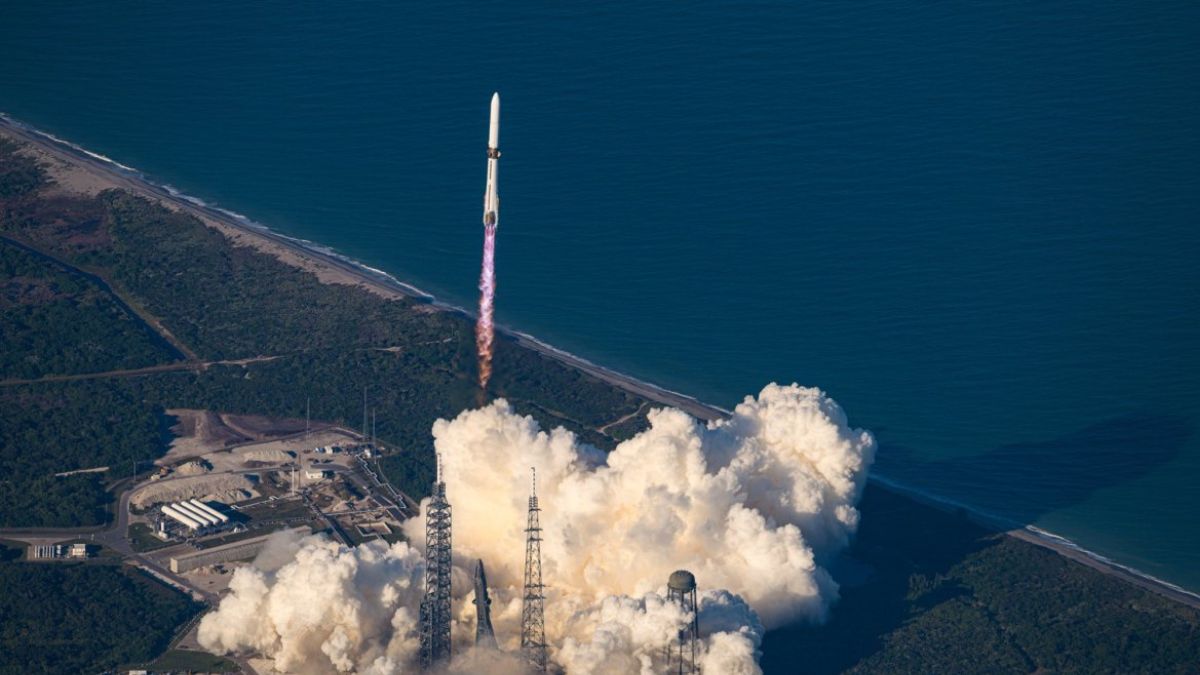
Blue Origin has finally launched its New Glenn rocket with NASA’s ESCAPADE twin spacecraft on Thursday from Launch Complex 36 at Cape Canaveral Space Force Station in Florida.
After a successful launch on @blueorigin’s New Glenn rocket, our ESCAPADE mission has begun its journey – ultimately destined for Mars. The twin spacecraft will orbit the Red Planet, investigating how the solar wind stripped its atmosphere. https://t.co/URspHkGcLx pic.twitter.com/sMahZAN2Ov
— NASA (@NASA) November 14, 2025
Commenting on this launch, the acting NASA administrator Sean Duffy said, “Congratulations to Blue Origin, Rocket Lab, UC Berkeley, and all our partners on the successful launch of ESCAPADE. This heliophysics mission will help reveal how Mars became a desert planet, and how solar eruptions affect the Martian surface. Every launch of New Glenn provides data that will be essential when we launch MK-1 through Artemis. All this information will be critical to protect future NASA explorers and invaluable as we evaluate how to deliver on President Trump’s vision of planting the Stars and Stripes on Mars.”
It is revealed that the twin spacecraft will investigate how solar wind has gradually stripped away much of the Martian atmosphere, causing the planet to cool and its surface water to evaporate. The mission will also help NASA prepare for future human exploration of Mars.
Explaining ESCAPADE’s journey, NASA has revealed that the twin spacecraft will first head to a location in space a million miles from Earth called Lagrange point 2. Right now, Earth and Mars are on opposite sides of the Sun, which makes it harder to travel from one planet to the other. In November 2026, when Earth and Mars are closely aligned in their orbits, the ESCAPADE spacecraft will loop back to Earth and use Earth’s gravity to slingshot itself toward Mars.
With the type of trajectory ESCAPADE is using, future missions could launch nearly anytime and wait in space, queueing up for their interplanetary departure, until the two planets are in position.
ESCAPADE is expected to arrive at Mars in September 2027, becoming the first coordinated dual-spacecraft mission to enter orbit around another planet. Once at Mars, the twin spacecraft will fly in the same string-of-pearls orbit and later shift into different orbits to collect scientific data, extending through 2029.
