

Google Research presents a new research establishing Hard-braking events (HBEs) as indicators of road segment crash risk

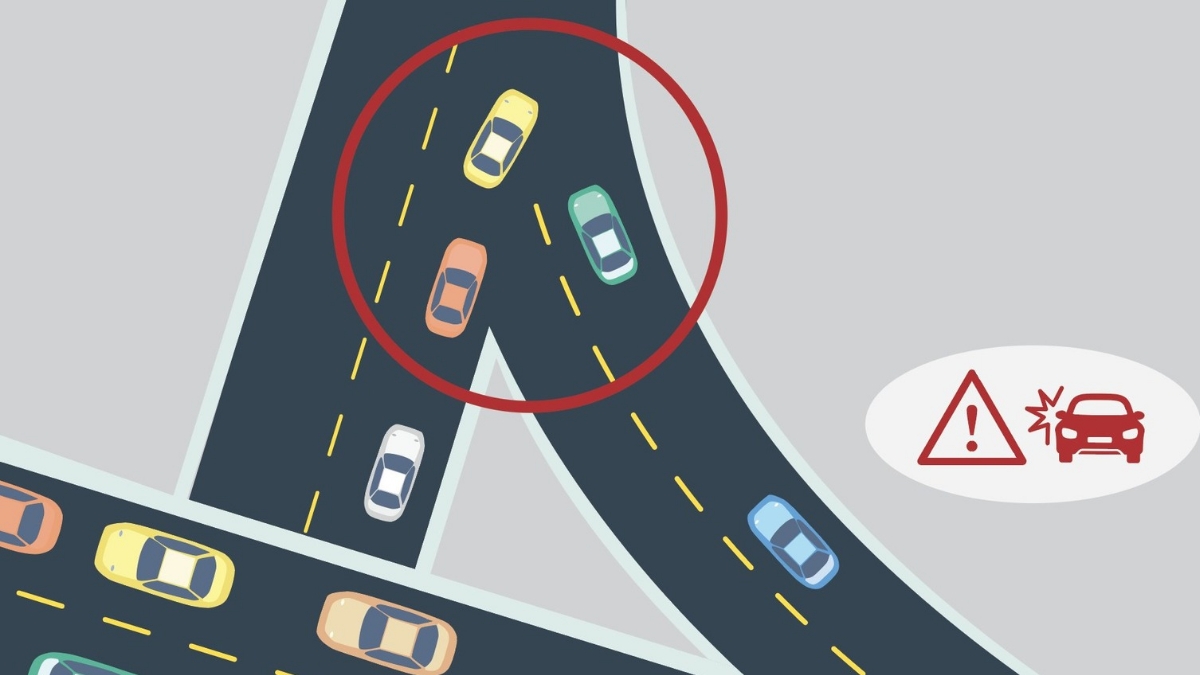
Yesterday, Google Research presented new research that suggested that roads with a higher rate of Hard-braking events (HBEs) have a significantly higher crash risk, and such events could be used as leading measures for road safety assessment.
Today we present new research establishing hard-braking events (HBEs) as a high-density "leading" indicator of road segment crash risk. This suggests HBEs could help identify high-risk road segments & inform specific infrastructure interventions. → https://t.co/4YVX7SmYv5… pic.twitter.com/RvvmoydyGV
— Google Research (@GoogleResearch) January 13, 2026
An HBE is an instance where a vehicle’s forward deceleration exceeds a specific threshold (-3m/s2), which is interpreted as an evasive maneuver. These HBEs facilitate network-wide analysis. Google Researchers have established a statistically significant positive correlation between the rates of crashes and HBE frequency by combining public crash data from Virginia and Columbia with anonymised, aggregated HBE information from the Android Auto platform.
HBEs as indicators of road segment crash risk
Data density
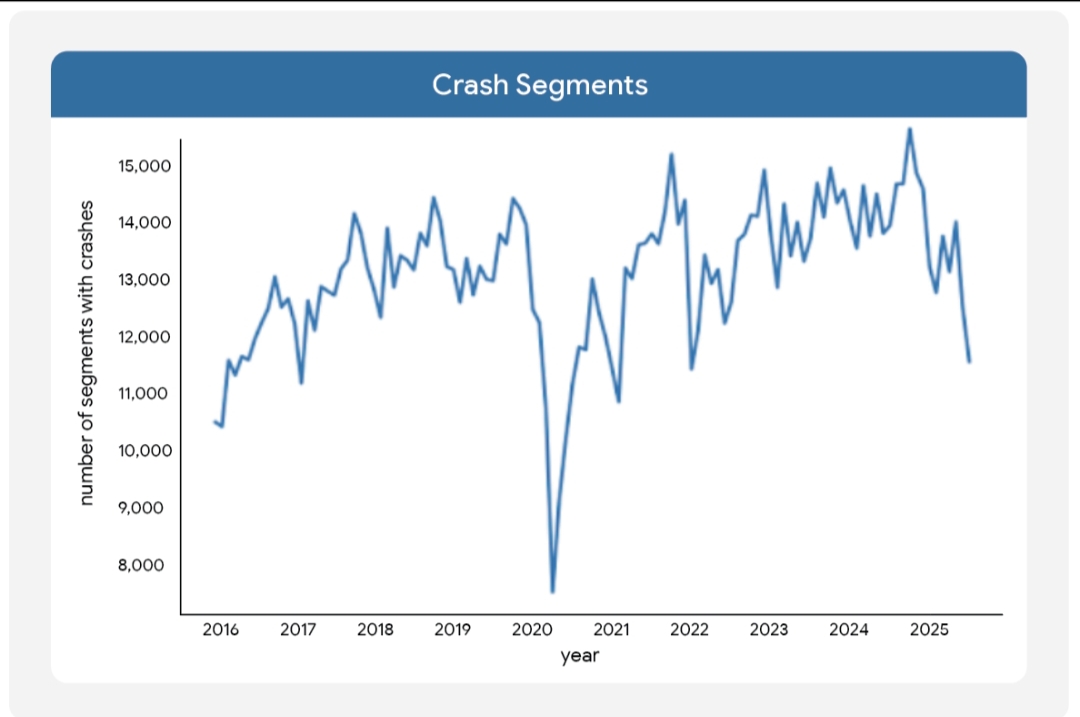
The researchers analysed 10 years of public crash data alongside aggregated HBE measurements. The analysis of road segments in California and Virginia revealed that the number of segments with observed HBEs was 18 times greater than those with reported crashes.
Statistical validation
To find out whether a high frequency of HBEs causally links to a high rate of crashes, negative binomial (NB) regression models, a standard approach in the Highway Safety Manual (HSM), were employed to account for a higher degree of variance than is typically found in crash data. The model structure controlled for various confounding factors- exposure, infrastructure, and dynamics.
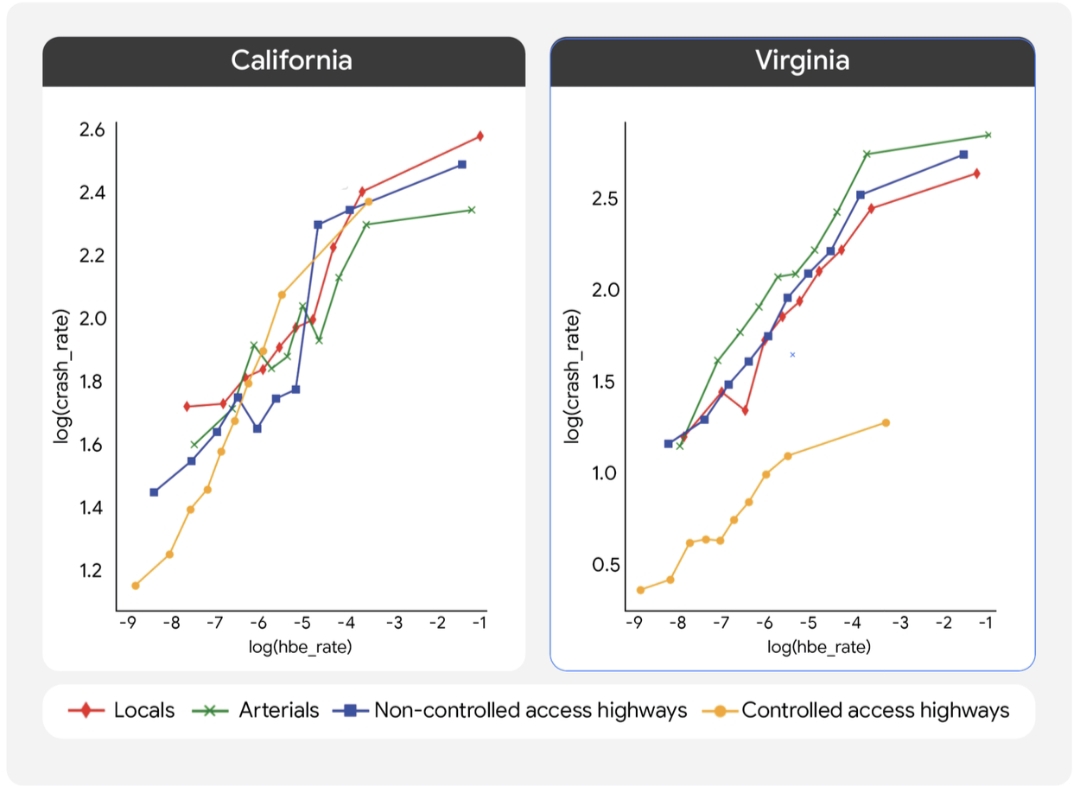
The results demonstrated a significant association between HBE rates and crash rates across both states. Road segments with higher frequencies of hard braking consistently exhibited higher crash rates. The regression analysis also quantified the impact of specific infrastructure elements.
High-risk merge identification
The researchers also examined a freeway merge segment in California to visualise the practical application of this metric. The historical data indicate that this segment has an HBE rate approximately 70 times higher than the average California freeway, and averages a crash every six weeks for a decade.
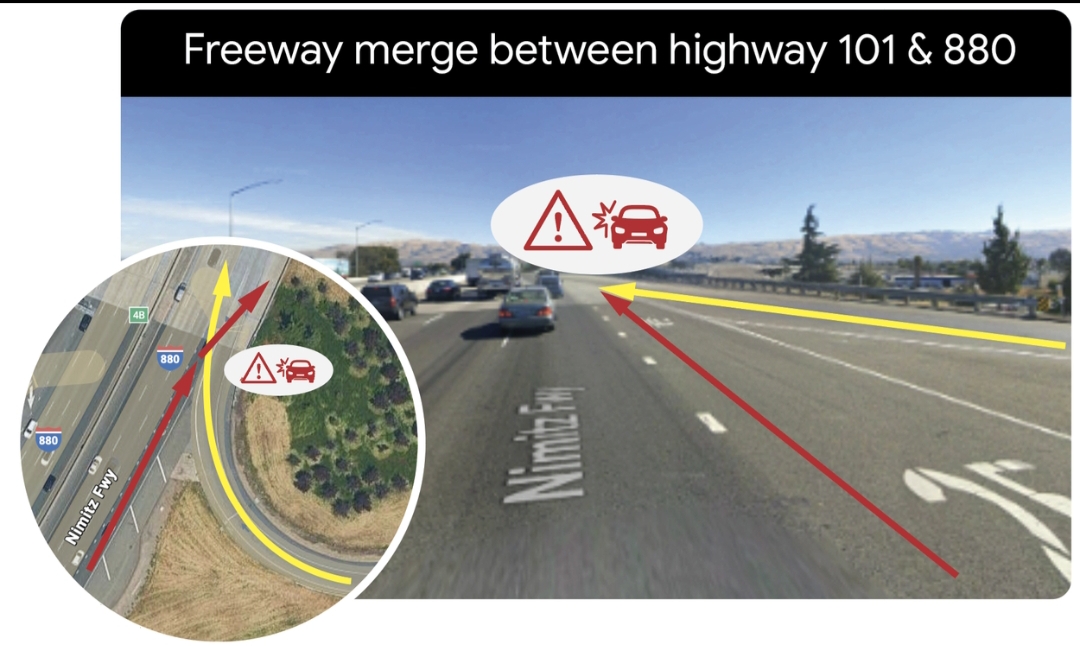
While analysing the connected vehicle data for this location, it was found that it ranked in the top 1% of all road segments for HBE frequency.
This case study validated HBEs as a reliable proxy capable of identifying high-risk locations even in the absence of long-term collision history.
Real-world application & Future work
The Mobility AI team at Google Research is working with the Google Maps platform to externalise these HBE datasets as a part of the Roads Management Insights offering.
Google Researchers are currently investigating mechanisms to spatially cluster homogeneous road segments to reduce data sparsity even further. Addressing these limitations will enable the transition from risk identification to targeted engineering, where high-density data informs specific infrastructure interventions.
