

Google DeepMind and Google Research officially introduce the WeatherNext 2 model

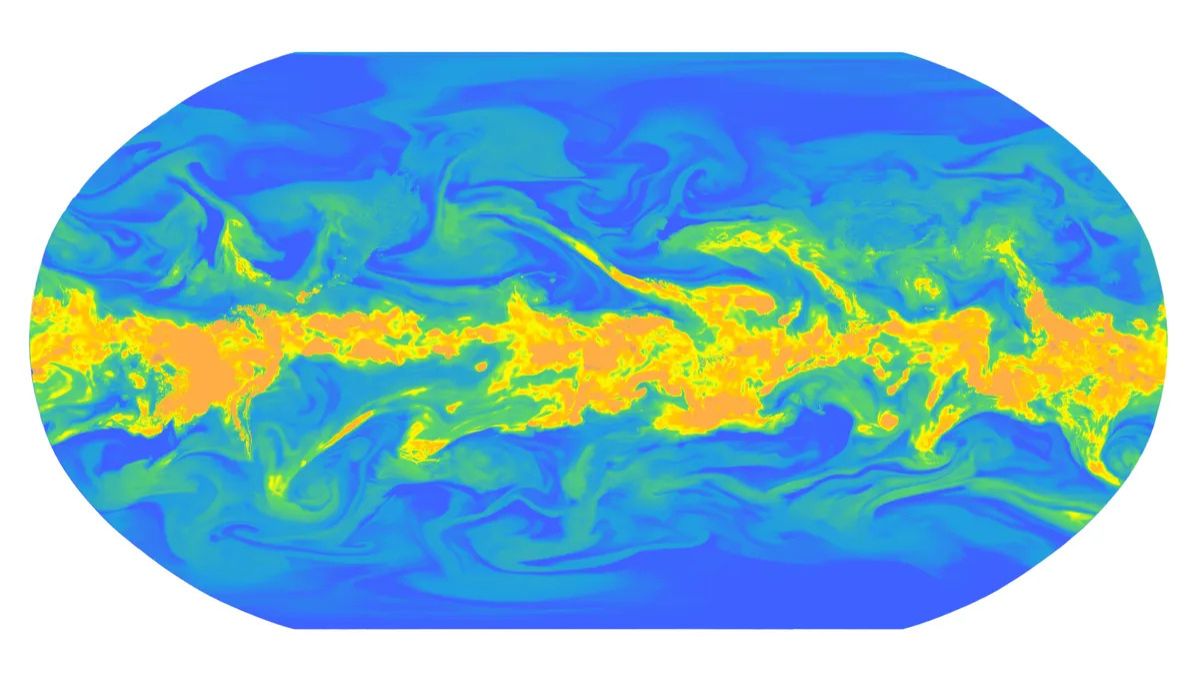
Google DeepMind and Google Research have introduced WeatherNext 2, an AI model that delivers more efficient, more accurate, and higher-resolution global weather predictions.
Introducing WeatherNext 2, our most advanced weather forecasting model. WeatherNext 2 delivers more efficient, more accurate and higher-resolution global weather predictions. Learn more. https://t.co/tB4NBoaYfu
— News from Google (@NewsFromGoogle) November 17, 2025
WeatherNext 2 model introduced
This AI model can generate forecasts 8x faster and with a resolution of up to 1 hour. WeatherNext 2 is said to support weather agencies in making decisions based on a range of scenarios through Google’s experimental cyclone predictions.
It can predict hundreds of possible weather outcomes from a single starting point. Each predictions take less than a minute on a single TPU. WeatherNext 2 is said to surpass the previous state-of-the-art WeatherNext model on 99% of variables (like temperature, wind, humidity) and lead times (10 -15 days), enabling more useful and accurate forecasts. This improved performance is enabled by a new AI modelling approach, Functional Generative Network.
This approach is particularly useful for predicting what meteorologists refer to as marginals and joints. Marginals are individual elements like the precise temperature at a specific location, the wind speed at a certain altitude, or the humidity. Joint forecasting is required for the most useful predictions, like identifying entire regions affected by high heat or expected power output across a wind farm.
With WeatherNext 2, Google is translating cutting-edge research into high-impact applications.
Availability
WeatherNext 2 forecast data is now available in Earth Engine and BigQuery. Google is also launching an early access program on Google Cloud’s Vertex AI platform for custom model inference. By incorporating WeatherNext technology, Google will now upgrade weather forecasts in Search, Gemini, Pixel Weather, and Google Maps Platform’s Weather API in the coming weeks.
