


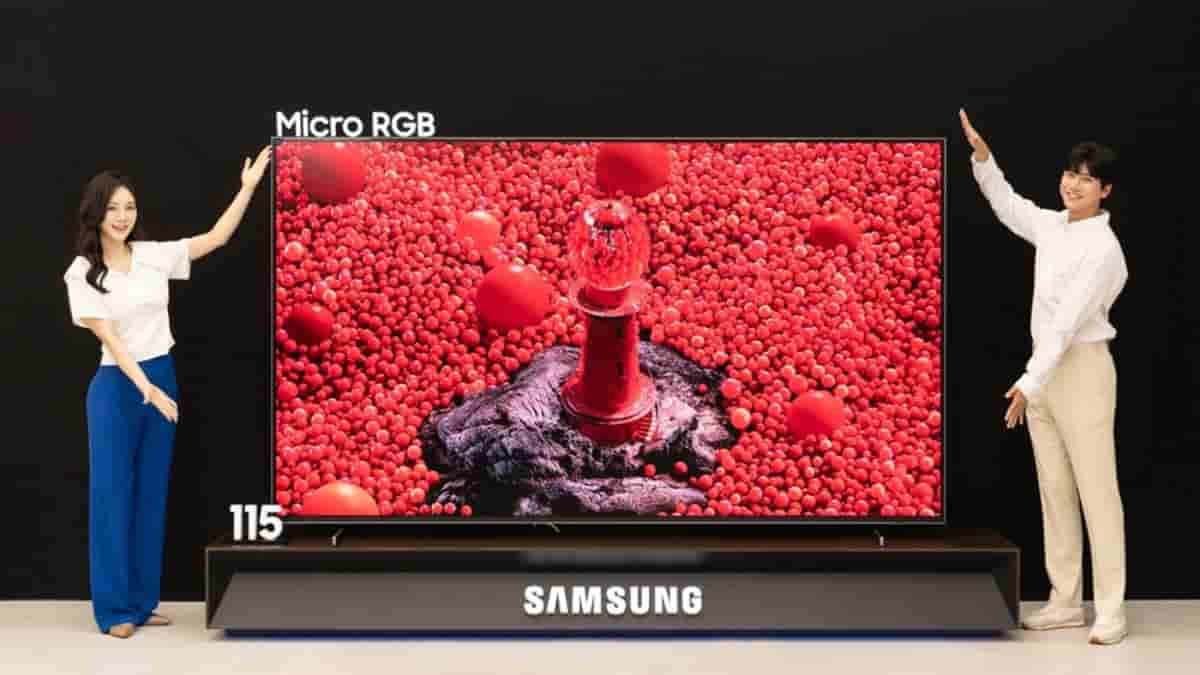
The South Korean tech giant Samsung has today officially launched the world’s first Micro RGB display that features a micro-scale RGB LED backlight behind a large 115-inch screen.
Samsung Launches World First Micro RGB, Setting New Standard for Premium TV Technologyhttps://t.co/xXlwJr3nbH
— Samsung Electronics (@Samsung) August 12, 2025
Samsung Micro RGB
Samsung’s Micro RGB is built on Samsung’s proprietary Micro RGB Technology, which arranges individually controlled red, green, and blue micro RGB LEDs, each less than 100µm in size, in an ultra-fine pattern behind the panel. It is powered by the Micro RGB AI Engine that uses AI processing to fully optimize both picture and sound.
With this AI engine, Micro RGB Color Booster Pro recognizes scenes with dull color tones and intelligently enhances colors across all content for a more vivid and immersive viewing experience. Additionally, Samsung’s Micro RGB features Micro RGB Precision Color, ensuring colors are delivered as intended for maximum accuracy and vividness.
It comes with Glare Free technology, Samsung Vision AI, super slim metal design, and is secured by Samsung Knox and Samsung’s 7-year free Tizen OS upgrade program. The display has received Micro RGB Precision Color certification from the Verband der Elektrotrchnik, a leading German electrical engineering certification institute.
“Micro RGB achieves unprecedented precision in the control of micrometer-sized RGB LEDs, raising the bar for color accuracy and contrast in consumer displays,” said Taeyong Son, Executive Vice President and Head of the R&D Team of the Visual Display (VD) Business at Samsung Electronics. “With this launch, we’re setting the standard in the large-sized, ultra-premium TV market and reinforcing our commitment to next-generation display innovation.”
It is revealed that after its debut in Korea, this display will launch in the US, with plans for a global rollout featuring a variety of sizes to meet consumer needs.
