


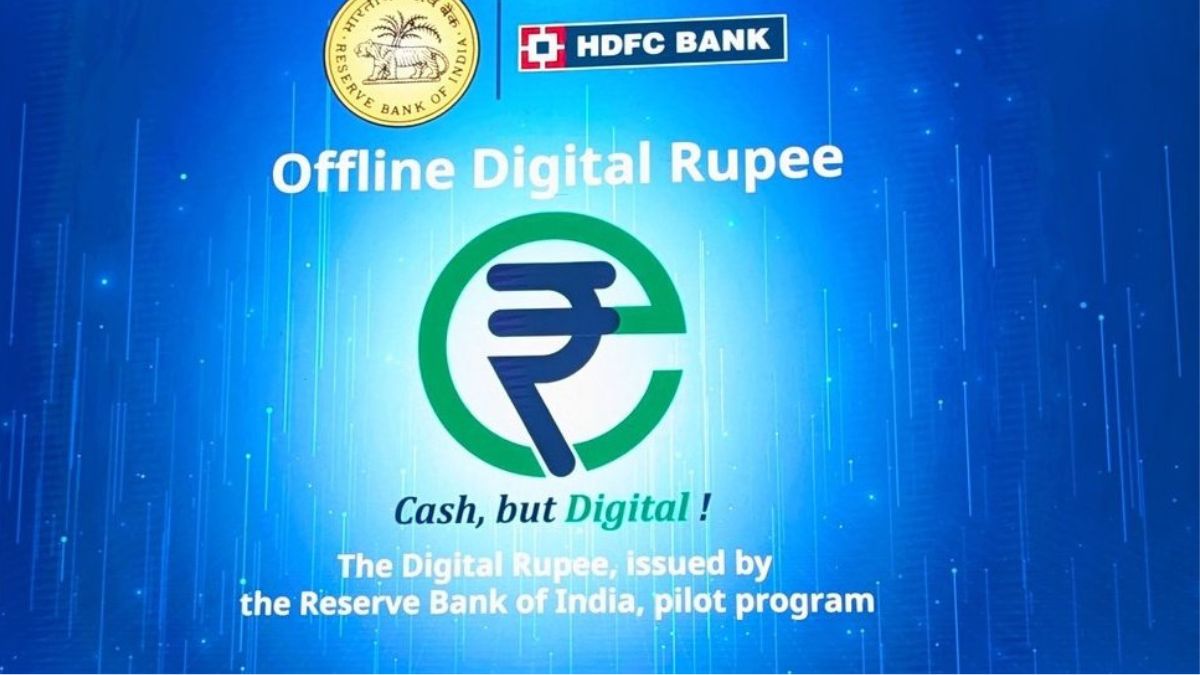
At the Global Fintech Fest 2025 event, the Reserve Bank of India has officially introduced the Offline Digital Rupee under India’s Central Bank Digital Currency (CBDC) journey.
Wondering what the digital rupee is? Digital Rupee is India’s Central Bank Digital Currency, which is basically a digital form of India’s physical currency. It is issued by the RBI and offers features similar to physical cash. Digital Rupee is stored in a digital wallet and can be used to send or receive money easily. And now RBI has introduced a new feature called the Offline Digital Rupee, which requires no internet.
This Offline Digital Rupee positions India as one of the first countries in the world to operationalize an offline version of a CBDC. According to the RBI website, this feature enables the user to transact in locations with limited or no internet connectivity. It is expected to mirror the advantages of physical cash, making it a reliable solution for use in remote areas. Currently, different solutions are being explored for this offline digital rupee: one solution facilitates transactions without internet but still requires telecom connectivity, while another solution is testing transactions leveraging NFC communication.
This feature allows users to pay using tap or QR. It aims to provide a cash-like experience, especially in remote and rural regions where there is no network/ low network/ patchy network situation. In the demonstration video shown at the event, it was revealed that the payment process is instant, where users simply tap their phone or device to the receiver’s and the value transfers from one digital wallet to another. The feature supports Person-to-Person transfers and Person-to-Merchant payments.
It is also programmable, which means the Offline Digital Rupee can be used for things like subsidies or company payouts.
Offline Digital Rupee is branded under the tagline Cash, but Digital! It is said that the offline CBDC system is faster, cheaper, and more reliable than conventional UPI as it eliminates network dependencies. The offline feature is launched in collaboration with HDFC Bank, which is a key partner in the RBI’s pilot program.
