


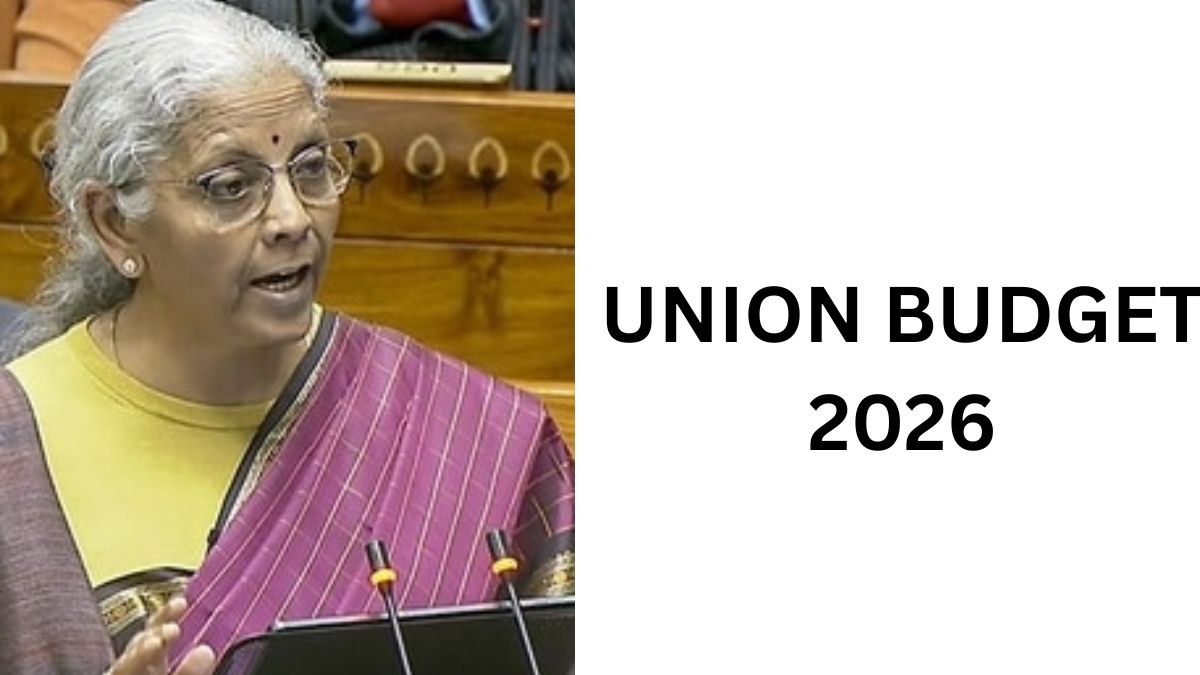
The Union Finance Minister Nirmala Sitharaman yesterday presented the Union Budget for the 2026-2027 FY. In this budget, some major announcements related to the tech industry were made.
Here are the details
Budget 2026: Gadgets and Tech Industry
- The launch of India Semiconductor Mission (ISM) 2.0 was announced to produce equipment and materials, design full-stack Indian IP, and fortify supply chains. This financial year, the focus will be on industry-led research and training centres to develop technology and a skilled workforce, as mentioned by the finance minister. The government has allotted a provision of Rs 1000 crore towards this mission.
- Budget 2026 proposes a common category for all companies offering IT services like IT-enabled services, Knowledge Process Outsourcing services and contract R&D services relating to software development. It is proposed to club all these services under a single category called Information Technology Services, and a common harbour safe margin of 15.5% will apply to all.
- This budget also proposes to increase the outlay of the Electronics Components Manufacturing Scheme (ECMS). Last year, the scheme was launched with an outlay of Rs 22,919 crore, and the central government will now allocate an outlay of Rs 40,000 crore.
- This financial year’s budget proposes to provide a tax holiday till the year 2047 to any foreign company that provides cloud services to customers globally by using data centre services from India. However, the company will need to provide services to Indian customers through an Indian reseller entity. A safe harbour of 15% on cost has also been proposed in case the company providing data centre services from India is a related entity.
- There is also a proposal to support the Indian Institute of Creative Technologies, Mumbai, in setting up Animation, Visual Effects, Gaming and Comics (AVGC) Content Creator Labs in 15,000 secondary schools and 500 colleges. The AVGC sector is seen as a growing industry that is projected to require 2 million professionals by 2030.
- Bharat-VISTAAR (Virtually Integrated System to Access Agricultural Resources), a multilingual AI tool, is also proposed that shall integrate the AgriStack portals and the ICAR package on agricultural practices with AI systems.
- Then comes the New Safe Harbour provisions for IT/ITeS companies. The threshold for availing safe harbour for IT services is also proposed to be enhanced substantially from 300 crore rupees to 2,000 crore rupees. It is announced that an automated rule-driven process shall approve the Safe Harbour for IT services without any need for a tax officer to examine and accept the application. Once applied by an IT Services company, the same safe harbour can be continued for a period of 5 years at a stretch at its choice.
- It is also proposed to fast-track the Unilateral APA (Advance Pricing Agreement) process for IT services and endeavour to conclude it within a period of 2 years. The period of 2 years can be extended by a further period of 6 months on the taxpayer’s request. It is also proposed to extend the facility of modified returns available to the entity entering APA to its associated entities.
- The government has also announced a couple of benefits for women entering STEM careers to youth seeking new skills, and for Divyangjan accessing greater opportunities. Initiatives such as the AI mission, National Quantum Mission, Anusandhan National Research Fund, the Research, Development and Innovation Fund, Divyanjan Kaushal Yojna and Divyang Sahara Yojna.
- Dedicated Rare Earth Corridors were also announced in Odisha, Kerala, Andhra Pradesh and Tamil Nadu, to promote mining, processing, research and manufacturing.
- The Finance Minister proposed to exempt basic customs duty on specified parts for microwave ovens, raw materials for the manufacture of aviation parts, imports of goods for nuclear power projects (until 2035), and sodium antimonate for use in the manufacture of solar glass.
- There is also a proposal for the Scheme for Container Manufacturing to create a globally competitive container manufacturing ecosystem, with a budgetary allocation of Rs 10,000 crore over 5 years.
- A National Destination Digital Knowledge Grid will be established to digitally document all places of significance- cultural, spiritual and heritage. This initiative will create a new ecosystem of jobs for local researchers, historians, content creators and technology partners.
- The finance minister also proposed to provide an exemption from income tax for 5 years to any non-resident who provides capital goods, equipment or tooling to any toll manufacturer in a bonded zone.
- The basic customs duty exemption to capital goods used for manufacturing Lithium-ion cells for batteries is extended to those used for manufacturing Lithium-ion cells for battery energy storage systems, too.
Tech Industry reaction to this budget
While commenting on this budget, Manoj Nair, Head of Applications at Fujitsu, said, “The Hon’ble Finance Minister has presented a forward-looking Union Budget that strongly reinforces India’s Viksit Bharat ambition, and conducive policies to make India a global technology hub. There is a huge focus on AI by positioning it as a force multiplier, combined with robust policies to support the growth of data centres. The launch of the India Semiconductor Mission 2.0 will accelerate the development of a resilient semiconductor ecosystem, spanning materials, equipment, full-stack IP design, and enhancing supply chains.
The move to approve Safe Harbour for IT services through an automated, rule-based mechanism is a significant reform that enhances ease of doing business and provides certainty in taxation for the industry. Equally encouraging is the focus on positioning data centres as critical infrastructure, along with the proposal to extend tax holidays till 2047 for global cloud service providers operating from India.
Together, these measures will help in boosting investor confidence, enhance innovation, create long-term growth opportunities for semiconductor and IT services companies, including data centre players, while further strengthening India’s role in the global technology value chain.”
Aparna Iyer, CFO, Wipro Limited, said, “It is commendable to see the government meeting the fiscal deficit targets for FY’26 despite a very volatile external environment, tax rate rationalization both on taxation for Individuals announced as part of last budget and GST rates rationalization during the year.
The budget clearly articulates the Government’s vision to promote the Indian IT services sector as a primary driver of India’s economic growth, leveraging Artificial Intelligence (AI) as the force multiplier. By identifying AI as central to accelerating and sustaining economic growth, the government underscores its strategy to establish India as an AI-powered economic superpower. Proposal to provide long term tax exemption for data center services provided from India to foreign customers will help in establishing India as a data center hub.
The proposals such as combining IT services and R&D Services into a single bucket, increasing the threshold limit for safe harbor and providing a 2-year timeline for conclusion of unilateral APAs will provide tax certainty and reduce the cost of compliance for companies operating in the sector.
We also welcome the government’s initiatives to further improve ease of doing business, as these reforms will support enterprises across sectors by alleviating operational challenges and boosting India’s economic growth momentum.”
Tanuj Patro, CFO, HMD said,“The increased ₹40,000 crore allocation for the Electronic Components Manufacturing Scheme is a strong boost for the telecom and electronics ecosystem, adding depth to domestic supply chains and helping India evolve from an assembly hub to a high-value manufacturing destination. Timely implementation, backed by robust infrastructure, will be critical to de-risk investments in advanced PCBAs, display assemblies and camera modules, enabling the transition from ‘Made in India’ to ‘Designed in India’.
The Semiconductor Mission 2.0 is equally commendable for its focus on materials, equipment and Indian-owned IP, strengthening full-stack domestic capabilities and positioning India as a future global semiconductor hub.
Notably, the 22-year tax exemption for data centres stands out as one of the smartest moves in Budget 2026, offering long-term policy certainty and accelerating foreign investment into India’s digital infrastructure, while the government’s focus on improving the debt-to-GDP ratio and fiscal deficit reinforces confidence in India’s macroeconomic stability.”
